It was the best day of my life. Receiving the gift of the Christian faith on the day of Christ’s Resurrection from the hand of the Holy Father is a matchless privilege and inestimable blessing. For me, at the age of almost 56, it was a unique, unforgettable historic event that signalled a radical, definitive change with respect to the past. During the night of 22 March 2008, on the occasion of the Easter Vigil, at the solemn liturgy celebrated in the magnificence of the Basilica of St Peter’s, the cradle of Catholicism, I was reborn in Christ. At the end of a long, protracted struggle, lived out as a Muslim by reason of the legacy inherited from my parents and with a personal history of lacerating doubts and torments, there ignited within me, by divine will and responsible choice, the light of the true Christian faith. My spiritual metamorphosis unfolded from nine o’clock over three hours that seemed as if they would never end. I passed those hours in uncontrollable excitement, outwardly betrayed by my tingling nerves, over the radical nature of the life experience that was taking place inside me and, I admit, in part because of the cold that gripped me and stayed with me from the beginning of the imposing ceremony in the atrium of the Basilica, accompanied by rain and icy temperatures.
Inside the Basilica, the lights had been extinguished. I was outside with six other adult catachumens waiting to receive the sacraments of Christian initiation, seated on the part of the parvis most exposed to the wind. It was in that damp cold, which usually makes me a little agitated and means I have to concentrate more to listen, reflect, assess and elaborate concepts, that I began to relive the film of my inner life. Half a century was reviewed frame by frame and sliced up with the now uncompromising, now compassionate scalpel of religion, calm enough for one last unconscious confirmation of a decision already taken consciously yet at the same time with sufficient urgency to recompose the overall framework of my existence into a harmonious whole, joyfully to register the image of the long-awaited, soon to be accomplished, Event, as I reinterpreted my past while redefining and revolutionising my future. (...) From the atrium, Benedict XVI led the procession towards the altar after the deacon, chanting the Lumen Christi for the third time, had brought the splendour of light back to the Basilica.
Then began the crucial stage of my conversion to Christianity, to which evidently I was called by the grace of God that had accompanied me from my youngest days, bringing into my path a series of “coincidences” that were anything but fortuitous, concealing as they did the will of the Lord that discreetly comes to meet us without making its presence palpable. As I slowly walked down the nave at the rear of the procession, my mind at once went back to the key event that started me on the route of interior spirituality at the age of four, and would more than half a century later culminate in my conversion to Christ. It was September 1956. I still have clear in my mind the day on which my long travails began. I had burst into tears as my mother Safeya, aided and persuaded by the Caccias, the family of wealthy Italian textile magnates resident for generations in my native Cairo, handed me over to Sister Lavinia. She hid me under her habit so I would not see my mother entrusting me to the education and affection of the Combonian sisters and their devotion to St Joseph. Later on, from the last year of primary school to the last year of my scientific secondary school, I studied at the Salesian Don Bosco Institute.
For fourteen years, I lived in boarding schools run by Catholic religious orders (...) I was able to gain first-hand experience of the lives of women and men who had chosen to devote their lives to God in the Church by serving their neighbours, regardless of religion or nationality, and who bore witness to their Christian faith in works for the common good and the interest of the community. There I began to read the Bible and the Gospels with interest and involvement, particularly enthralled by the human and divine figure of Jesus. I was able to attend the church of St Joseph opposite the Combonian sisters’ school and the church of Don Bosco at the Salesian Institute. Every so often, I went to holy mass and once I actually approached the altar and received communion. From the religious point of view, it was an act without significance since I hadn’t been christened but it clearly signalled my attraction for Christianity and my desire to feel myself part of the Catholic community. (...) My conversion did not come about in a flash after some traumatic, joyful or sad event, nor was it merely a rational adherence prompted by reading sacred texts, or a purely intellectual confrontation with supporters or opponents of the Catholic faith.
Instead conversion was the ripe fruit of a long journey through a life of study and direct familiarity with the sources of wisdom but above all, with experiences of otherness that involved me entirely, slowly laying down in my soul and mind ever thicker layers of spiritual and rational adherence to the love and faith of Jesus. (...) Finally came the crucial moment of Baptism. I was being reborn in Christ and was about to take my first steps as an authentic Christian. I stood up and walked to the baptismal font, accompanied by my godfather. For the first time, I stood before Benedict XVI. I knew that at that precise moment, the destiny assigned to me by divine grace fifty-six years earlier, from my birth, was being fulfilled. I bowed with the respect and humility of a believer in the religious primacy of the Pope as Christ’s vicar on earth. I approached the font, stooped and Benedict XVI poured the blessed water over my head. “I baptise you in the name of the Father, and of the Son and of the Holy Ghost”. (...)
The moments immediately preceding my baptism and the baptism itself I experienced as an authentic liberation. For fifty-six years, I perceived myself as a Muslim and others around me identified me as a Muslim. At the age of fifty-six, I was born again as a Christian, cancelling out the Islamic identity that I have consciously and deliberately rejected. Inside me and outside, everything will change. Nothing will remain as it was before. For those who, like me, consider religious faith and the sphere of absolute, universal, transcendent values to be the foundation of life, thought and action, adherence to Christianity takes the form of a radical change in the whole of personality and existence. Naturally, it will take some time for this adherence to faith in Jesus to grow increasingly full and heartfelt. I feel like a child taking his first hesitant steps in his new Christian life. But I have a great desire to walk and run as a Christian! Thank you, Jesus.
Showing posts with label Rome. Show all posts
Showing posts with label Rome. Show all posts
Thursday, May 08, 2008
Convert Baptized by Pope Writes Book
Here are some excerpts which were published in Corriere della Sera from Magdi Christiano Allam's new book “Grazie Gesù. La mia conversione dall'islam al cattolicesimo” [Thank You Jesus. My Conversion from Islam to Christianity] . In the book, Allam, who converted from Islam to Catholicism recounts his road to conversion. In these excerpts he describes his baptism:
Monday, April 28, 2008
The Angelicum
As I look forward to starting my junior year in one month, I have also started looking at graduate programs. I have grouped schools into four lists: possibilities, reaches, dreams, and not even in my nightmares.
The Angelicum is one of the dream schools. Unless I become a millionare there is no way I will be able to pack up my family and move to Rome for a few years, but oh how I want to. This is one of the reasons I shouldn't have put my education off for so many years. Maybe someday, when my kids are all grown and in school themselves I will be able to make the dream of studying with the Dominicans at the Pontifical University of St. Thomas Aquinas, but until then, I must console myself with this awesome ad.
The Angelicum is one of the dream schools. Unless I become a millionare there is no way I will be able to pack up my family and move to Rome for a few years, but oh how I want to. This is one of the reasons I shouldn't have put my education off for so many years. Maybe someday, when my kids are all grown and in school themselves I will be able to make the dream of studying with the Dominicans at the Pontifical University of St. Thomas Aquinas, but until then, I must console myself with this awesome ad.
Wednesday, June 06, 2007
The Real News of the Audience
Despite the excitement over the "attack" on Pope Benedict, the audience went on as usual and the real story of today's audience is the homily he taught on St. Cyprian.
St. Cyprian, "the first African bishop to achieve the crown of martyrdom," was the subject of Benedict XVI's catechesis during his general audience, held this morning in St. Peter's Square in the presence of 40,000 people.
Cyprian, said the Pope, "was born in Carthage to a rich pagan family" and "converted to Christianity at the age of 35. ... He became a priest and later a bishop. In the brief period of his episcopate, he had to face the first two persecutions authorized by imperial edict, that of Decius (250) and that of Valerian (257-258)," following which many faithful "renounced their faith, or at least failed to comport themselves correctly when under trial. These were the so-called 'lapsi,' that is, the 'lapsed'."
Cyprian was "severe but not inflexible towards the 'lapsi,' giving them the chance of forgiveness after an exemplary penance." The saint also "showed great humanity and was pervaded by the most authentic evangelical spirit in exhorting Christians to offer fraternal help to pagans during the plague." But he was "irremovable in combating the corruption and sins that devastated the moral life, especially that of avarice."
"Cyprian wrote many treatises and letters, all of them associated with his pastoral ministry. Little given to theological speculations, he wrote above all for the edification of the community and to encourage the faithful to good behavior."
In the saint's works, the Holy Father explained, "the Church is by far the topic most dear to him. He distinguishes between the visible hierarchical Church and the invisible mystical Church, at the same time forcefully affirming that the Church is one, founded upon Peter. He never tires of repeating that 'whoever abandons the chair of Peter, upon which the Church is founded, deludes himself if he believes he remains in the Church'."
Hence, "the indispensable characteristic of the Church is unity, as symbolized by the seamless robe of Christ; a unity that finds its foundation in Peter and its perfect realization in the Eucharist," said the Holy Father. He then referred to Cyprian's teaching on prayer "which highlights how in the Our Father Christians are shown the correct way to pray." That prayer refers to "us" and "our" rather than to "me" and "mine," said the Pope, "so that he who prays does not pray only for himself. Ours is a public and community prayer. ... The Christian does not say 'my Father,' but 'our Father,' even when praying in the privacy of a closed room, because he knows that everywhere and in all circumstances, he is a member of the one Body."
"Cyprian, then, lies at the origins of that fruitful theological-spiritual tradition that sees the heart as the privileged place of prayer. ... It is there that God meets and talks to man, ... and man listens to God."
"Let us make our own that 'understanding heart' about which the Bible and the Fathers speak," the Pope concluded. "We have such great need of it."VIS
The Holy Father also spoke about the G-8 summit, which began today.
At the end of today's general audience, celebrated in St. Peter's Square, the Pope made an appeal to heads of State and government of the G8 countries - the seven most industrialized countries in the world plus the Russian Federation - who are holding their annual summit meeting in Heiligendamm, Germany from June 6 to 8.
The Pope recalled how on December 16, 2006 he had written to Angela Merkel, chancellor of Germany, at the beginning of the German presidency of the European Union, "thanking her, in the name of the Catholic Church, for the decision to keep the theme of world poverty on the agenda of the G8, with specific reference to Africa. Chancellor Merkel kindly replied to me on 2 February last, assuring me of the G8's commitment to attaining the Millennium Development Goals.
"Now," he added, "I should like to make a further appeal to the leaders meeting at Heiligendamm, not to retreat from their promises to make a substantial increase in development aid in favor of the most needy populations, especially those of the African continent.
"In this regard, the second Millennium Goal merits special attention: 'to achieve universal primary education - to ensure that all boys and girls complete a full course of primary schooling by 2015.' This is an integral part of the attainment of all the other Millennium Goals: it is a guarantee of the consolidation of goals already reached; it is the starting-point for autonomous and sustainable processes of development.
"It must not be forgotten that the Catholic Church has always been at the forefront in the field of education, reaching places, particularly in the poorest countries, that State structures often fail to reach. Other Christian Churches, religious groups and organizations of civil society share this educational commitment. According to the principle of subsidiarity, this reality should be recognized, valued and supported by governments and international organizations, among other things by the allocation of sufficient funding, so that greater efficacy may be guaranteed in the attainment of the Millennium Development Goals. Let us hope," he concluded, "that serious efforts be made to reach these objectives."VIS
Sunday, May 06, 2007
Remember The Sack

480 years have passed since the sack of Rome.
Here is an excerpt from my posting from last year.
May 6, 1527, the day of the sack of Rome, marks the greatest day in the history of the Swiss Guard. That morning, Captain General Bourbon launched a series of attacks on Rome. During one of them, at the Torrione Gate, while leading the assault of the walls, he himself was mortally wounded. After just a moment's hesitation, the Spanish mercenaries broke through the Torrione Gate, while the lansquenets invaded the road of Borgo Santo Spirito and St. Peter's. The Swiss Guard, standing firm at the foot of the obelisk (now in St. Peter's Square, but then near the German cemetery within the Vatican close to the Basilica), together with the few remnants of the Roman troops, resisted desperately. Their Captain, Kaspar Röist was wounded, and later killed by the Spaniards in his quarters in front of his wife, Elizabeth Klingler. Of the 189 Swiss Guards, only 42 survived, the ones who, when all was lost, under the command of Hercules Göldli guarded Clement VII’s retreat to safety in Castel Sant’Angelo. The rest fell gloriously, massacred together with two hundred fugitives, on the steps of the High Altar in St. Peter's Basilica. Pope Clement VII and his men were able to escape to safety, thanks to the "Passetto", a secret corridor which Pope Alexander VI had built along the top of the wall connecting the Vatican with Castel Sant’Angelo.
Across the Sisto bridge the lansquenets and Spaniards fell on the city and for eight days committed every sort of violence, theft, sacrilege and massacre, even the tombs of the Popes, including that of Julius II, were violated in search of spoils. There were as many as 12 thousand dead and the booty amounted to ten million ducats.
Viva il Papa! Viva Ecclesia!
Photo by Domini Sumus.
Monday, April 23, 2007
Rome - The Post List
Update - (April 5th)
The Rome Postings will resume after the Triduum.
Special thanks to Amy Welborn for posting about this series.
Day One - The Flight
Day Two - The Audience
Day Three - Touring Rome
Day Four - The Consistory
Day Four - The Apostolic Palace
The Rome Postings will resume after the Triduum.
Special thanks to Amy Welborn for posting about this series.
Day One - The Flight
Day Two - The Audience
Day Three - Touring Rome
Day Four - The Consistory
Day Four - The Apostolic Palace


Saturday, March 24, 2007
Rome - Day Four - The Consistory
This post is giving me nothing but problems. I have attempted to post it 6 times. One time it worked but without all the pictures. Then I tried to fix it and ended up losing everything so I have to start all over again. I am frustrated.
Friday, March 24, 2006 was the day of the consistory and the surrounding receptions. It was absolutely exhausted, and exhilirating all at the same time.
Photos by Domini Sumus
Friday, March 24, 2006 was the day of the consistory and the surrounding receptions. It was absolutely exhausted, and exhilirating all at the same time.
Our day started early this morning at 5 am. Thankfully, the clothes that we sent to the laundry to be pressed came back perfect. We tried to get washed and ready in the incredibly small bathroom and "cell". We kept tripping over each other.
Piazza Sant' Ufficio
Somehow we did get ready and by 6:30 we were having breakfast. At 7 I looked out the window and saw that people were already beginning to line up to for the consistory. So, we left the hotel and joined the 40-50 people who were waiting in line. As we waited we watched the people who work in the Vatican coming to work through the Piazza Sant' Ufficio and the various delivery trucks coming to make their deliveries. The Americans who were in line were fascinated to see a Coca-Cola truck delivering to the Vatican. We were all freezing cold and hoping that it wouldn't rain. The skies were threatening and there were occasional rumbles of thunder. Fortunately, the rain held off until the consistory ended. Then the downpour began.
Within 20 minutes the line of 50 had become a massive crowd of several thousand which kept growing.
The barricade was opened at 8:30 and we were sent through security. We walked though metal detectors and our bags were x-rayed. People started pushing and running to get ahead, but the Swiss Guard and Vatican Police put a stop to that. Several guards called out to people, "Remember you ARE in church!" Some people who tried to force their way to good seats were detained by the guards and made to wait a few minutes.
We found some excellent seats in the middle of the first row. We were right next to the television camera. In the section in front of us, there were a few rows reserved for the cardinal’s families and visiting heads of state.
Archbishop Marini rehearsing with the servers
The square was buzzing with activity as gardeners made last minute changes to flowers. They even laid sod. Altar servers rehearsed under Archbishop Marini’s careful direction. Microphones were tested, furniture was repositioned and red hats were counted.
The Cardinals-elect
The choir stood against the wall of St. Peter’s and was almost not able to be seen. The monsignori sat on the left, behind the Holy Father. The Cardinals were in front of them and the bishops were in front of them sitting slightly askew.
The Gentlemen of the Vatican and their wives sat on the right along with more bishops.The new cardinals processed from the Apostolic Palace to the sagrato of the basilica. Seeing Bishop Sean in his cardinatial robes was such a moving experience brought me to tears. Literally tears of joy. He sat on the sagrato, directly in front of us. I was surprised when he noticed us and waved.
Cardinal-Elect O'Malley
Pope Benedict walking to his chair
It wasn't long before Pope Benedict appeared in procession from the central doors of the basilica. The organ and choir sounded beautiful. Actually, the entire liturgy was spectacular.
The moment!
The new cardinal
One of the moments which caused a outpouring of emotion was when Cardinal Dery, from Ghana, was carried up the steps to the pope in his wheelchair. Pope Benedict rose, leaned down and embraced him. It was a loving, tender gesture of love and respect towards the 87 year old cardinal which got a huge "Awwww!" from the congregation.
After the liturgy, we left the square along with the massive crowd. We returned quickly to our hotel for a few minutes then headed to the Pontifical North American College. It was a short walk through a tunnel, a parking garage and a hill. Once we got to the PNAC we were surrounded by familiar faces. It was nice to see so many people from the Diocese of Fall River. There were also many people from the Archdiocese of Washington, where Cardinal O'Malley served as a priest for many years, and from the Diocese of Palm Beach.
The reception was in honor of both Cardinal O'Malley and Cardinal Levada, so there were many people from the Archdiocese of San Francisco. Several of the people at our table were from San Francisco and three others were theology students at the Angelicum. Since it is a Friday of Lent, lunch was eggs every which way and pasta.
William Cardinal Levada
After we ate, we joined the lines to greet both Cardinal O'Malley and Cardinal Levada. I must admit to being nervous to speak with the successor of Cardinal Ratzinger. However, he was very nice. I don't know what I was afraid of. It's not like I have never talked with a cardinal before, but it is the first time I have talked with anyone who works so closely with the pope.


Photos by Domini Sumus
Friday, March 23, 2007
Rome - Day Three - Touring the City

Thursday, March 23, 2006 was the only completely free day we had in Rome. There was some event planned for all the other days. We spent this day exploring the beautiful city and some of it's many churches.
Today has been a very interesting day. We have learned a lot. We woke up early this morning and went upstairs to the dining room for have breakfast. Our hotel is one of the few here which offers a full American style breakfast.
Soon after we sat down, we met a priest, Fr. T., from my diocese. He joined us for breakfast and we had a lovely time eating overcooked scrambled eggs, bacon, and red blood orange juice. We had such a great time that breakfast went on well after we had finished eating. It was well over an hour before we decided that we couldn't spend the whole day in the dining room.
Father asked us where we were headed for the day and we admitted that we didn't have a clue. He offered to take us on a tour of Rome. He knew exactly where he was going, or at least pretended to. We went to so many churches that I don't remember the names of them all. The only one that I remember was Santa Agnese. We also visited the Piazza Farnese and Piazza Navona.
We split at noon as Father had scheduled to have lunch with another priest from our diocese. We went to find, the clerical tailor, Gammarelli. In front of the shop, we met a group of seminarians from the North American College. One f these was from my diocese and a friend of my husband. We took some pictures together and talked briefly before they had to rush to their next class. He was very surprised and took some pictures with us. Afterwards, my husband and I went into Gammarelli to look for some gifts. After looking at many things, including the famous evangelists miter which was popular with so many popes (1,190.00 euro) , we made our selections.
Then we went for lunch because everything was closing for siesta. We found a little pizza place called La Sagrestia on Via Seminario. I got a pizza capriccia with sauce, cheese, prosciutto and mushrooms and peas. My husband had pizza margherita with sauce, cheese and basil. It was delicious.
After lunch we went to the Basilica of Our Lady of the Martyrs, better known as the Pantheon. It is amazing to think that that building is over 2,000 years old. It was built in 27 B.C. St. Peter probably walked right by it, if not St. Peter certainly saw it. I was quite surprised to see a painting where a pope or bishop is wearing the same style pallium as Pope Benedict wears.As we were leaving we met up with Fr. T again. From there, the three of us went to see the church of Santa Maria Sopra Minerva. The church doesn’t look like much from the outside but the interior is breathtaking. It was interesting to see the lines outside which mark the heights the city had flooded to.
As we were leaving it began to pour and then hail. We had to buy umbrellas from one of the many vendors in the square who we had rejected just a few minutes before. After visiting various church supply shops, we took a taxi back to our hotel.
When we got to our hotel, we met Archbishop Dolan from Milwaukee. We spoke with him for a few minutes. He is a delightful man with a great sense of humor. He sounds like a lot of fun to spend the day with. Archbishop Dolan is known to be rather conservative, despite what some people may think that doesn't mean he doesn't have a sense of humor.
At 6 pm, Fr. T, my husband and I went for dinner at Passegiata sul Borgo, better known as Roberto's. The restaurant is located on Borgo Pio, which is one of the main streets near the Vatican. The restaurant was empty when we arrived, but it didn’t take long for it to fill up. Most of the diners were clergy and their guests. I have never been in a restaurant before where there was at least one priest at each table. Actually, there were more priests and bishops there than lay people. There were even a few cardinals there. The food was great. I am getting used to the idea of a pasta course, a primi piatti (first course) and so on. We had pasta with meat and cream sauce, cannelloni, and for our main course veal. For dessert we had tartufo. It was all delicious. Dinner was very relaxed and took over 3 hours.
We will be waking up very early tomorrow morning to attend the consistory and the two receptions we have been invited to attend. I can’t wait!

Photos by Domini Sumus.
Thursday, March 22, 2007
Rome - Day Two - The Audience
Here is the second installment of my Rome diary. Part one can be found here.
We arrived in Rome exactly one year ago today. On that day, I had a incredible encounter which helped change my view of so many things. I regret that it ever had to happen, but I am so grateful that it did. Here is what happened on my first day there.

Photos by Domini Sumus
We arrived in Rome exactly one year ago today. On that day, I had a incredible encounter which helped change my view of so many things. I regret that it ever had to happen, but I am so grateful that it did. Here is what happened on my first day there.
After I finished my last entry into this travel log, I was able to sleep for about another hour. Since the girls who sat behind me apparently don't need sleep, I decided to read one of the two books I brought with me. I decided on Pope John Paul II's "Gift and Mystery". Although I have read it before, I thought it would be something good to meditate on sort of as a primer for the trip. It was even better this time.
Our plane landed at Leonardo DaVinci airport at 8 am. Once in the terminal, it was terrifying. We had no idea where we were going and those CD's that claimed to be able to teach me Italian in 7 days weren't helping me. We decided to follow a priest who had been on our place since he looked like he knew exactly where he was going. I hope that he was going to baggage claim and not to a connecting flight.
Luckily he was going to baggage claim and once we got our bags we met our driver so he could take us to our hotel. Our driver took us on a terrifying ride to our hotel. He didn't follow any traffic laws. He drove on the sidewalk, in the wrong lane into oncoming traffic, he darted between cars and Vespas, and turned two lane streets into three lanes. I was convinced I would die in that car and I prayed to at least live long enough to see St. Peter's.
Because there had been a traffic accident on the highway, our driver took us to our hotel through a back way. All the streets were quite dirty and decrepit. It was obvious that these were the slums of Rome. Between my prayers I told my husband, "If this is what Rome looks like, don't expect to leave the hotel much".
However, once we reached the Via della Conciliazione the scenery became much more pleasant. We were also surprised by two familiar faces, Archbishop Sean O'Malley and his secretary, Fr. Brian Bachand. They were out shopping and enjoying the beautiful day.
I wept when I saw St. Peter's Basilica. There was something about seeing it in person that was so powerfully overwhelming. It immediately felt like home.Rezidenza Paolo VI from inside St. Peter's Square
Our driver dropped us off at our hotel, Rezidenza Paolo VI, which is across the street from the Apostolic Palace, St. Peter's and the Congregation for the Doctrine of the Faith (Holy Office). The building, which is located in the Extraterritorial Zone of Vatican City, used to be an Augustininan monastery and is it obvious by the size of the rooms. They are incredibly small, but I am not planning on spending much time in the room. Our room overlooks the courtyard of what is the current Augustinian monastery. Just down the hall, there is an awesome terrace with overlooks St. Peter's square. The view from there is amazing, but unfortunately, the outer portion is restricted.
As soon as we checked in, the desk clerk gave us two tickets for the Papal Audience. We took the tickets and headed up to our rooms to quickly freshen up and head across the street. We had less than 30 minutes.
I am embarrassed to say this, but I really didn't care much about the audience. At least, that is what I was telling myself. For as long as I can remember, I wanted to see Pope John Paul II. I had been offered an opportunity to go to WYD in Denver, but my parents didn't let me go. I was devastated. Here I was in Rome with tickets to see the Pope and it was the wrong Pope. Here is my confession. When Pope Benedict was elected, I cried and it wasn't out of joy. It was out of certainty that he was going to destroy the Church I love so deeply. I remember screaming, "NO! Anyone but him!" My opinion softened a bit after I decided to take his books which had been collecting dust in my library and actually read them. As I studied them, I realized that he wasn't who people made him out to be, but I still had my reservations about him. That is one of the things that made be decide to write a term paper about him.


I rationalized that going to the audience would be a good way to stay awake. I was right. The audience energized me. There were more people than I had ever seen in my life and they were all singing, chanting, cheering. It was incredible to see.
Although we arrived only minutes before the audience began, we were able to get a place right against the barricade. I don't know how it happened, but I am sure there was a very good reason.
Pope Benedict came in the square in his white Popemobile. He immediately came down the aisle where I was standing. He shook a few hands and kissed a few babies then he came closer to where I was. I raised my enormous camera to take a picture and he immediately looked right at me and smiled. I don't know if he did or not, but it was like he posed. Right after I took the picture the Popemobile stopped. I was too busy looking at the Pope to find out why. The woman to my left extended her hand and he clasped it. Then he reached out to me. I couldn't move. I just looked athim in shock.
I kept thinking, "Here he is. Right in front of me. The Successor to St. Peter, the Vicar of Christ is right in front of me and I am wearing the blue fleece sweatsuit I wore on the plane". It was then that I realized that, no, he wasn't John Paul, but he was my Pope and I was going to love him anyway. He smiled at me and shook the hand of the seminarian to my right.
After the audience we returned to the room to shower in our tiny shower. It is literally the smallest shower I have ever seen. There is barely room to turn around and I have to remove the shower head from the holder to use it. Even still, after all those hours, just taking a shower felt so good.
We headed back out at 2 to find the bronze doors. The guards made us stand in the line for the Basilica. There were thousands of people in the line and hundreds more, particularly those with tour guides cutting the line. In true Roman fashion, we able to shorten our wait time. After we got cleared through security we had to wait in a much shorter line. I was 4th in line.
It was an incredible feeling to enter the Apostolic Palace. The Swiss guard directed me to a small room on the right where a man checked my name off the list and gave me two white envelopes with my consistory tickets. Before I left, I asked the guard if I could take pictures of the staircase and he let me.
Since we had already been cleared by security, we decided to see the Basilica. What a beautiful church. The first thing we saw was the Pieta. It was so sad to see it behind glass. Even though it was so far away, it was still a thousand times more beautiful in person than in pictures.
We were also able to see the body of Pope Innocent XI as well as Blessed Pope John XXIII and Pope St. Pius X. Since Pope Pius X founded the Diocese of Fall River, it was special to see him and pray before his body.
I was surprised at how small the basilica is. Perhaps it just looks small because everything is so proportional, but I expected the distance from the door to the altar to be much longer.
Afterwards, we did some shopping and went to dinner at 7 at La Vittoria. The food was delicious. I had beef scaloppini limone and my husband had scaloppini marsala. We also had tortellini soup and bruschetta. We finished it up with tiramisu and cappuchinno. Yum! The waiter brought us limoncello afterwards. That was one strong drink, but it was so delicious.
As we were leaving the restaurant, Archbishop Sean was coming in with a Franciscan priest and Fr. Bachand. He looked so happy and relaxed. The most relaxed and happiest I have seen him in quite some time. We were able to talk with him for a few minutes before we headed back to our hotel and bed.
Right now it is almost 3 am here at 9 pm at home. We got to bed at 8:30. It is so strange to realized that it is 3 am here and only 9 pm at home. By the time people at home wake up, our day here is half over. I also find myself desiring to sit on the balcony, even at 3 am and just look at the Basilica.

Photos by Domini Sumus
Wednesday, March 21, 2007
Rome - The Flight
Since today marks exactly one year since my trip to Rome, I have decided that I will post an edited version of my trip diary and some pictures from the trip. I had planned to post these each day, but I our hotel did not have wireless internet access, even though I had been told that it did. While I was able to find some very nice internet cafes, since everything was saved on this computer and not on a flash drive or CD is was just more than I could get involved with during my very busy trip.
These will be posted daily according to the date. Since today was the day my flight left, I will tell you about my flight.
You can find part two of my report here.
These will be posted daily according to the date. Since today was the day my flight left, I will tell you about my flight.
You can find part two of my report here.
Today is Tuesday, March 21, 2006. My husband and I are traveling to Rome to attend the consistory which will take place on Friday. This is our first trip to Europe and visiting Rome has been a lifelong dream, well as lifelong as something can be at my age. Wile I am excited to be going to Rome, my excitement is completely eclipsed by my joy of who is becoming a cardinal. Cardinal-Elect Sean O'Malley is a dear friend and after working with him for so many years I always knew he would get a "red hat" eventually, but I never dreamed I would be in St. Peter's to see it.
We flew on Continental Airlines from Logan to Newark, then from Newark to Rome. We arrived at Logan airport early. Because we were early, we were able to take an earlier flight. It was a good thing too because it took so long time to get through security in Newark that if we hadn’t taken the earlier flight, we wouldn’t have had enough time to have lunch.
There were at least 8 priests on our flight who were wearing clerical attire. Cardinal McCarrick and my bishop, Bishop Coleman were on our flight. There was also another bishop who I couldn't identify. Had this been during my younger, bolder days I would have approached him and asked his name, but I think that would have made my husband very unhappy.
There is also a girls sports team of some type on board. They are so loud that I can't sleep. The girls sitting behind me keep pushing on my seat. I just turned around to give them a dirty look, but I don't think they care. I guess I won't antagonize them. I do plan on getting a little sleep on this flight.
Ok, I slept for about an hour. When we get to Rome it is going to be 8 am tomorrow, which means it will be 2 am back at home. Must get more sleep!
Saturday, February 17, 2007
Michelangelo's Vatican Apartment
The Petrus Eni exhibit in Vatican City is continuing. While I have not visited it, people I know who have visited the exhibit tell me that it is awesome.
There are some items which are mentioned in the exhibit, but are not on display. One of these items is an account bookwhich containas an entry for a key which Michelangelo had made for a chest.
Here is are a few excerpts from the USA Today article:
This gives me just one more reason to want to visit this exhibit. If only I was in Rome!
There are some items which are mentioned in the exhibit, but are not on display. One of these items is an account bookwhich containas an entry for a key which Michelangelo had made for a chest.
Here is are a few excerpts from the USA Today article:
Going through their archives for an exhibit on the 500th anniversary of the basilica, researchers from the Fabbrica di San Pietro, the office where all documents concerning the running of the basilica are kept, came across an entry for a key to a chest "in the room in St. Peter's where Master Michelangelo retires."
(...)
"We now know that Michelangelo definitely had a private space in the basilica," Maria Cristina Carlo-Stella, who runs the Fabbrica, said in an interview with The Associated Press this week. "The next step is to identify it."
The ink-scripted entry contained in a parchment-covered volume listing the expenditures of the Fabbrica for the years 1556-1558, refers to the payment of 10 scudos to the blacksmith who forged the key, but offers no details about the chest or the location of the room.
...
A frescoed room with a cozy fireplace, part of the area in the left wing of the basilica where the archives are housed, had traditionally been called "la stanza di Michelangelo," Michelangelo's room.
(...)
"The theory is very romantic and conspiratorial, but totally unfounded," said Federico Bellini, an art historian who works in the archive department, as he pointed to a 16th-century sketch on his computer showing the state of the left wing during Michelangelo's time at the Vatican — a pile of rubble intertwined with vegetation.
Originally the Fabbrica, whose documents date from as far back as 1506, was in the right wing of the basilica, already built at the time of Michelangelo. It was known that artisans had been allotted lodgings there, leading experts to direct their search for Michelangelo's studio to that area.
This gives me just one more reason to want to visit this exhibit. If only I was in Rome!
Thursday, December 21, 2006
Roman Nativity Disgraced
(ANSA) - Opposition parties and Catholics expressed outrage Wednesday at two Italian MPs who placed gay couples in the Lower House Nativity scene.
Bruno Mellano and Donatella Poretti of the tiny Rose in the Fist party put the dolls - two pairs of embracing Barbies and Kens - in the crib in support of the rights of same-sex and unwed couples in Italy.
The centre-left government, which the Rose in the Fist is part of, has said it will soon present draft legislation aimed at giving rights to unwed couples, including gay ones. But the issue of same-sex unions is not high up on Italy's political agenda. Parliament staff quickly removed the dolls, but the stunt sparked a major furore all the same.
"It is a disfigurement of the religious beliefs of the majority of the Italian people," said Luca Volonté, the House whip for the centre-right Catholic UDC party."It is the umpteenth act offending the Catholic religion and confirmation of the violent secularism of some parts of the governing alliance".
Antonio Mazzocchi of the rightist National Alliance was among those who called on House Speaker Fausto Bertinotti to take disciplinary action against Mellano and Poretti. "It is a serious act of propaganda and vulgarity that offends this symbol of Christianity and the traditional family," Mazzocchi said. Carolina Lussana of the devolutionist Northern League accused the Rose in the Fist of not "respecting the family, not even the Holy Family".
Monsignor Giovanni Lajolo, the governor of the Vatican City, said that the gesture "speaks for itself"."There is no need for us to comment," Lajolo added. "Our sentiment is commiseration for them, because they are unable to understand what real values are".
Even parts of the centre left expressed dismay.
"Today's senseless provocation in the House crib pains us first as citizens and then as Catholics," said Family Minister Rosy Bindi of the Daisy Party.
"Even legitimate political battles should respect the values of the overwhelming majority of the public". Rosalba Cesini, an MP with Italian Communist party which supports legislation for same-sex unions and rights for unwed couples, feared the stunt may backfire.
"As well as trivializing the issue, the raid on the House nativity scene is a serious political mistake," Cesini commented.
"In fact, mixing the holy and the secular is the same mistake made by those opposed to granting legal recognition to unwed couples, regardless of their sexual orientation".
House Speaker Bertinotti criticised the move too."I'm in favour of the recognition of rights for everyone, but there is no reason to trigger senseless rows about these issues with unpleasant shortcuts," he said.
It is not the first time that an Italian Nativity scene has raised eyebrows.
Last week Bologna city council's Nativity scene was at the centre of a heated row following the inclusion of a naked figurine representing a famous dead Italian porno star - Moana Pozzi.
Last year, the Tuscan seaside town of Viareggio was inundated with protests after its crib featured a six-metre tall sculpture of Mary in high heels and a short skirt.
Friday, December 01, 2006
Cardinalitial Art Exhibit
ROME (ANSA) - A new exhibit has opened in Rome charting the charismatic and powerful cardinals that have helped shape the history of the Catholic Church.
The event features over 70 portraits of the best-known princes of the church, spanning 500 years from the mid-16th century through to the 1990s.
"The show leads us through half a millennium of art, exploring the public and private affairs of many important figures who shaped the history of our city," said Rome Culture Councillor Gianni Borgna. "At the same time, it traces the development of art over the centuries, showing the evolution in tastes and styles.
"Popes are important but cardinals are more interesting from a history of art point of view, because they produce more lively portraits. There are more restrictions on paintings of popes," he explained.
The exhibit encompasses a variety of mediums, including paintings, sculptures and photographs.
One of the event's two curators, Maria Elisa Tittoni, explained that the exhibit sought to draw out the dual significance of portraiture.
"On the one hand, they are important with regards to the history of art and on the other, with regards to the history of the city," she said.
"There are basically three types of portrait, all of which are amply covered here: standing figures; sitting figures at a three-quarter angle and half figures".
The most significant portraits include a full-length painting of Cardinal Giovan Battista Montini (1897-1978) who would later become Pope Paul VI; a portrait of Alessandro Farnese (1468-1549), later Pope Paul III, attributed to Raphael; and a bronze sculpture entitled 'Cardinal Sitting' by one of Italy's best-known 20th-century sculptors, Giacomo Manzu.
There is also a selection from a series of photographs of the Roman Curia, taken by Marco Delogu between 1998 and 1999.He photographed 24 of the Vatican "government's" 27 members as part of the project, including the German cardinal Joseph Ratzinger, who was later elected Pope Benedict XVI.
"Ratzinger was the one who gave me most time, almost a whole hour, and he was the only one I was able to shoot in close-up," recalled the photographer.
One of the most striking elements of the exhibition is the array of tones and textures in the scarlet silk cassocks worn by the cardinals.
"Walking along the corridors of Palazzo Braschi, the predominant colour in the paintings is red," said Borgna. "However, as these are works from different eras, the approaches and techniques change, testifying the development in art itself".
Palazzo Braschi was deliberately chosen by the exhibit's curators owing to its history: now the Museum of Rome, it was built at the end of the 1700s by Pope Pius VI for his nephew Luigi Braschi Onesti.
'La Porpora Romana Rittrastica Cardinalizia dal Rinascimento al Novecento' runs until February 22.
Thursday, November 09, 2006
Beware of False Relics
Ansa is reporting that there are false relics of Pope John Paul II being sold in shops near the Vatican.
Small pieces of cloth being sold near the Vatican as 'relics' of the ever popular John Paul II are bogus, Catholic Church authorities warned on Thursday .
Scraps of material which have allegedly been rubbed against the tomb of the late pontiff are being sold to tourists in at least one souvenir shop .
The scraps of material, encased in a round piece of transparent plastic, are available in three sizes and start at 3 euros each .
The same shop is also selling statuettes of the Polish pontiff on which he is described as Saint John Paul II, even though the process expected to lead to his canonisation is still long from over .
The shopkeeper was asked by a journalist on Thursday whether the articles had been approved for sale by the Vatican. He declined to answer .
Monsignor Slawomir Oder, the official in charge of John Paul's canonisation process, said that the cloth 'relics' now on sale had definitely not received a green light from either his office or the Rome diocese ."
They have no official recognition and anyway what's the point of rubbing cloth on his tomb when you can have a piece of one of his robes?" he said .Msgr Oder pointed out that pilgrims and devotees can obtain official John Paul relics free of charge through his office at the diocesan headquarters .
The authorised items comprise a small picture of the Polish pope together with a fragment cut out of one of the tunics he wore as pope .
Ever since John Paul died in April 2005, pilgrims have been coming to Rome to visit his tomb at St Peter's Basilica. Souvenir shops do a roaring trade in gadgets, calendars, posters showing the popular pontiff's face.
The widespread fascination with the charismatic figure has been fed by numerous TV dramas and films about his life. Meanwhile, procedures are under way to have the late pope declared a saint and there are frequent reports of alleged miracles attributed to him .
Celebrating the Pope's Cathedral

Today is the feast of the dedication of the Cathedral Archbasilica of the Most Holy Savior and Saints John the Baptist and John the Evangelist at the Lateran. Commonly called St. John, Lateran or the Lateran Basilica, this is the Cathedral church of the Diocese of Rome. St. John, Lateran, not St. Peter's is the Pope's church.
While the dedication of a cathedral is usually only celebrated in the diocese in which the cathedral is located, St. John, Lateran holds such an important place in the Church that it's dedication is celebrated as a mandatory feast
 throughout the world. In fact, it is one of the few feast days which is celebrated on Sunday, should the feast happen to occur on a Sunday.
Despite what I have heard tour guides and countless others say, there is no Saint named John Lateran. Rather, the basilica is dedicated to both St. John the Baptist and St. John the Evangelist and is built on land once owned by the Lateran family. Under the altar is a wooden table believed to be the altar on which St. Peter, the Apostle celebrated Mass.
Tradition also holds that the baldachino hold the heads of both St. Peter and St. Paul.

It was the first basilica and it's construction was ordered by Constantine, The original building was destroyed by earthquake, then rebuilt and destroyed by fire and rebuilt again. Although the building which is currently standing is not the original, it maintains the original layout.
On a related note, today is the second anniversary of my son's baptism. Yes, he was baptized on a Tuesday.
All photos by Domini Sumus
Friday, November 03, 2006
Reggie Foster's Back!
John Paul is reporting that Fr. Reginald Foster's Latin classes have found a new home in a cultural center on Via della Gatta, 6 which is located near Piazza Venezia.
Viva Fosteri!
Viva Fosteri!
Tuesday, October 17, 2006
Gregorian University Cancels Fr. Foster's Latin Classes
ROME (CNS) -- Snippets of Virgil's Latin poetry interspersed with the loud guffaws of U.S. Carmelite Father Reginald Foster will not be heard bouncing down the hallways this year at Rome's Pontifical Gregorian University.
Father Foster, who has translated documents into Latin for four popes, told Catholic News Service Oct. 17 that his popular Latin courses at the university had been canceled.
A secretary for the university's academic vice rector told CNS that Father Foster had not been fired and that the classes had only been suspended for this academic year.
Father Foster said he received notice on the evening of Oct. 14, just two days before courses were set to begin, in an e-mail from the university's academic vice rector, Jesuit Father Sergio Bastianel. Father Foster said the e-mail said he and his students were not allowed to use the university's classroom Oct. 16 when classes were scheduled to start.
A few days before he received the e-mail notice, he said some students had been telling him that his course was no longer advertised on the university's schedule and that personnel had "refused to register students for the courses."
Father Bastianel was unavailable for comment when contacted by CNS Oct. 17, but he had relayed to his staff reasons behind the university's decision.
Father Foster's Latin classes had been suspended, staffers said, because each course had not reached the minimum requirement of 15 registered, paying students. Some other classes had been suspended this academic year for the same reason, the staffers said.
Though Father Foster's Latin classes at the university had been enormously popular, most students had not been paying for the course, according to the staffers and Father Foster.
The priest said the lack of registered students "is my fault for the simple reason that I told the students if you want to come for Latin, I will teach you ... and of course they're not (registering) and they're not paying."
Typically, school records would show that only three out of 65 students paid and "that's what (the university) didn't like," he said.
Students had been taking advantage of the Milwaukee-born priest's open-door, free-for-all instruction for the past 20 years, he said, and now that he is freed from duties at the university this year, he wants to set up and run his own informal Latin academy. Courses will be gratis, he said.
He announced his plans to about 150 students who showed up for the canceled Latin classes Oct. 16 at the university.
"We sat out in the corridor ... and I said, 'Listen friends, they say classes are canceled, but they're not canceled. They're going to be continued in a week or so in another location,'" said Father Foster.
He said students responded with "clapping and screaming" in excitement over the announcement.
While Father Foster said he still has to decide where the lessons will be held, he said he has received numerous offers from groups and associations, including a Jewish school in downtown Rome that has an auditorium that can fit 40-50 students.
Father Foster, who works in the Latin-language section of the Vatican's Secretariat of State, started teaching at Gregorian University in 1975. The university quietly dropped its school of Latin literature in 2002, and Father Foster's courses were moved to the university's department of languages.
Father Foster also stars in a short weekly Vatican Radio feature called, "The Latin Lover," in which he extols the beauty of Latin and often laments its decline in the church.
Saturday, August 26, 2006
Recap of Fr. Foster's Lecture
Iosephus has informed me of a great post on his blog about the lecture given by Fr. Reginald Foster at Notre Dame. After reading his post and am deeply regretting not being in attendance, but one cannot be everywhere at once and after travelling to Rome for the consistory, I am currently on a travel moratorium. Gotta finish paying for Rome.
Here is a tidbit from the post, but you have to head over there to read the rest. It is excellent.
Here is a tidbit from the post, but you have to head over there to read the rest. It is excellent.
The talk was held in Notre Dame's Law School and the crowd who came to see Reggie was large enough that we had to remove from a lecture hall, of modest size, to the court room, slightly larger, one floor up; even there, there were not enough places for people to sit. My family and I had come all the way from East Lansing; my friend, Iacobus (not the inimitable Iacobus of this blog) came from Iowa City; I talked to a priest who had come from Chicago; I talked to a Chemistry professor who had come over from Valparaiso (my alma mater); and then, of course, there were any number of people from Notre Dame and St. Mary's, etc. Reggie drew quite an audience, though I imagine that, by and large, it was Catholic, if the number of men in clericals was proportionate to the laity in the group.
Read the rest of the post here.
Saturday, August 12, 2006
Fr. Foster to Speak at Notre Dame
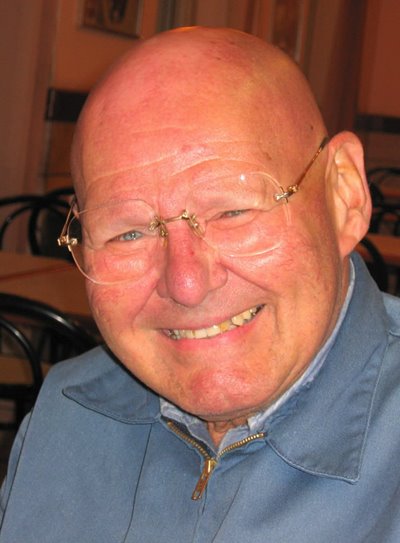
Fr. Reginald Foster, the Pope's Latinist and Vatican Radio's "Latin Lover" will be speaking at the University of Notre Dame on August 24th.
Here are the details:
Is Latin Really Dead?
Why the Academy and the Church Should Preserve the Latin Language
An informal conversation with
Reginald Foster, O.C.D.
Department of Latin Letters
Secretariat of State
The Vatican
Date: Thursday, August 24, 2006
Time: 4:30 p.m.
Place: Notre Dame Law School, Room 120
For more information on Fr. Foster, read this site.
How I wish I could go!
Sunday, June 11, 2006
The Latin Lover
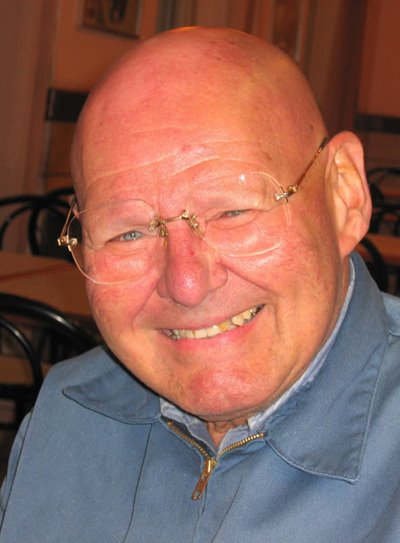
I have been a fan of Vatican Radio's "Latin Lover" program for some time. The Latin Lover is Fr. Reginald Foster, O. Carm, a Vatican latinist who is responsible for the translation of countless papal documents into Latin. He works out of the office of the Vatican Secretary of State and also teaches Latin at the Gregorian University.
The Carmelite priest from Wisconsin with a gruff voice and a vast command of Latin is an unlikely priest to be working in the Vatican. He is free of the stiffness and propriety of many Vatican officials and doesn't seem to fit in, yet he does.
It seems I am not the only person to find Fr. Foster interesting. He has been written about in numerous newspapers. Here is one of the articles:
USA Today
Milwaukee Journal Sentinal
One of Fr. Foster's students has an excellent website about him.
Listen to the archives of his radio program here
Sunday, March 05, 2006
What exactly happens at a consistory
On February 24th Pope Benedict XVI delivered his announcement of intent to elevate 14 bishops and 1 priest to the College of Cardinals. Since only bishops maybe cardinals, the priest who is being elevated will be ordained a bishop sometime before the consistory.
These 15 found out about the elevations a few days before the announcement was made.
On March 23rd, there will be a private consistory where all members of the College of Cardinals will meet with the Holy Father. It is not believed that the cardinal-designates will be in attendance.
The consistory will take place on March 24th in the Paul VI Audience Hall. Previous consistories have been held outdoors, but due to the cold weather and the small number of new cardinals, it will be held indoors.
The consistory will take place during a Liturgy of the Word service. During the ceremony, each bishop will promise fidelity to the death to the Holy Father. Then, each will approach the Holy Father and receive a red biretta. Each cardinal will also be appointed titular bishop to a Roman church. This is an ancient custom reflecting on the original role of the College of Cardinals.
Following the ceremony, there will be various receptions held throughout the Vatican. Traditionally, these receptions are held on the first floor of the apostolic palace, although they have also been held in the Audience Hall and the Vatican Museum.
On March 25th, there the Holy Father and the new cardinals will celebrate Mass in St. Peter's Basilica. During this Mass, they will receive their cardinals rings from the Holy Father.
Subscribe to:
Posts (Atom)