Friday, December 01, 2006


Thursday, November 30, 2006
Fun With Latin
Jimmy Akin has posted a list of handy Latin phrases. Here are a few of my favorites:
Sentio aliquos togatos contra me conspirare. I think some people in togas are plotting against me.
Caesar si viveret, ad remum dareris. If Caesar were alive, you'd be chained to an oar.
Quantum materiae materietur marmota monax si marmota monax materiam posit materiari? How much wood would a woodchuck chuck if a woodchuck could chuck wood?
Nihil curo de ista tua stulta superstitione. I'm not interested in your dopey religious cult.Noli me vocare, ego te vocabo. Don't call me, I'll call you.
Utinam logica falsa tuam philosophiam totam suffodiant! May faulty logic undermine your entire philosophy!
Sic faciunt omnes. Everyone is doing it.
Fac ut vivas. Get a life.
Oops, They Did it Again!
Kyodo News is reporting that another illicit Chinese ordination has occured.
China's state-sanctioned Catholic organization said Thursday a priest in the eastern province of Jiangsu has been ordained as bishop coadjutor, marking China's third bishop ordination this year without Vatican approval.
Father Wang Renlei's 2.5-hour ordination ceremony was attended by about 1,000 parishioners, including more than 20 priests from the local Xuzhou diocese and other provinces, vice chairman of the government-backed Chinese Catholic Patriotic Association Liu Bainian told Kyodo News.
Vicar general Wang, 36, was voted to be the bishop coadjutor to assist Bishop Qian Yurong, 94, in an uncontested election in October.
"Qian, who remains as the diocese bishop, has no immediate plan to retire," Liu said.
China ordained Ma Yinglin of Yunnan Province in April and Liu Xinhong of Anhui Province in May without Vatican approval, prompting a statement from the Vatican that hinted at automatic excommunication of the two bishops.
Liu Bainian said that as China does not have diplomatic ties with the Vatican, there is no appropriate channel for China to communicate with it about bishop ordination.
Diplomatic ties between China and the Vatican were severed shortly after the Communist Party took power in 1949.
Talks have been held on and off on restoring ties but two major hurdles remain in the way, namely China's demands that the Vatican cut ties with Taiwan and that the Church stay out of China's internal affairs, which it interprets to include ordination of bishops.
The latest ordination has dealt a "fatal blow" to dialogue between the Holy See and China, a Vatican source was quoted as saying by AsiaNews, a Rome-based website.
The website, frequently reporting on Catholic Church-related matters in Asian countries, reported Wednesday that two Vatican-approved bishops in China's northern province of Hebei were forced to take part in Wang's ordination.
It cited sources as saying that an unspecified number of other bishops expected to take part in the ceremony were kept in isolation and subjected to physical and psychological pressures.
"It is impossible, church matters are managed by the diocese and there is no government interference," Liu said in dismissing the report. "None of the priests and bishops who attended the ceremony had been forced against their will."
Catholics in China are divided into two groups, one worshipping at churches controlled by the Catholic Patriotic Association -- an organization set up by the authorities to keep a grip on the religion -- while others loyal to the Vatican go to underground churches.
China's state-sanctioned Catholic organization said Thursday a priest in the eastern province of Jiangsu has been ordained as bishop coadjutor, marking China's third bishop ordination this year without Vatican approval.
Father Wang Renlei's 2.5-hour ordination ceremony was attended by about 1,000 parishioners, including more than 20 priests from the local Xuzhou diocese and other provinces, vice chairman of the government-backed Chinese Catholic Patriotic Association Liu Bainian told Kyodo News.
Vicar general Wang, 36, was voted to be the bishop coadjutor to assist Bishop Qian Yurong, 94, in an uncontested election in October.
"Qian, who remains as the diocese bishop, has no immediate plan to retire," Liu said.
China ordained Ma Yinglin of Yunnan Province in April and Liu Xinhong of Anhui Province in May without Vatican approval, prompting a statement from the Vatican that hinted at automatic excommunication of the two bishops.
Liu Bainian said that as China does not have diplomatic ties with the Vatican, there is no appropriate channel for China to communicate with it about bishop ordination.
Diplomatic ties between China and the Vatican were severed shortly after the Communist Party took power in 1949.
Talks have been held on and off on restoring ties but two major hurdles remain in the way, namely China's demands that the Vatican cut ties with Taiwan and that the Church stay out of China's internal affairs, which it interprets to include ordination of bishops.
The latest ordination has dealt a "fatal blow" to dialogue between the Holy See and China, a Vatican source was quoted as saying by AsiaNews, a Rome-based website.
The website, frequently reporting on Catholic Church-related matters in Asian countries, reported Wednesday that two Vatican-approved bishops in China's northern province of Hebei were forced to take part in Wang's ordination.
It cited sources as saying that an unspecified number of other bishops expected to take part in the ceremony were kept in isolation and subjected to physical and psychological pressures.
"It is impossible, church matters are managed by the diocese and there is no government interference," Liu said in dismissing the report. "None of the priests and bishops who attended the ceremony had been forced against their will."
Catholics in China are divided into two groups, one worshipping at churches controlled by the Catholic Patriotic Association -- an organization set up by the authorities to keep a grip on the religion -- while others loyal to the Vatican go to underground churches.
Wednesday, November 29, 2006
Bishop Hendricken to be Re-Entombed
The Diocese of Providence has announced that the body of Bishop Thomas Hendricken, the first bishop of Providence will be re-entombed in the Cathedral of Sts. Peter and Paul on December 8th. Music from Bishop Hendricken's funeral Mass will be performed.
The Roman Catholic Diocese of Providence today announced that Friday, December 8, 2006 at 12 Noon in the Cathedral SS. Peter and Paul, One Cathedral Square in Providence will mark the solemn return of the body of Bishop Thomas Hendricken, the first Bishop of Providence, to the Cathedral and his re-entombment to a new, dignified resting place. December 8 is also the Feast of the Immaculate Conception, a Holy Day of Obligation. Public and media are invited to attend the Mass.“As the founding Bishop of Providence, Bishop Hendricken was a leader of historic proportions for the Catholic Church in New England,” said Bishop Thomas J. Tobin. “He made the establishment of our present Cathedral his personal and ardent goal – a goal that he would never live to see as the first Mass celebrated in the Cathedral was his funeral. The celebration of the return of Bishop Hendricken, which is significant in itself, is also an opportunity to recall the wonderful history of our Diocesan Church, and to remember with gratitude all those – bishops, priests, deacons, religious and laity – who have gone before us in faith.”
Bishop Hendricken was ordained the first Bishop of Providence in 1872 by Pope Pius IX. He was born in born in County Kilkenney, Ireland and emigrated to United States as a missionary. Bishop Hendricken served as shepherd for the Diocese of Providence until his death in 1886, with his Funeral Mass the first Mass said in the Cathedral of SS. Peter and Paul – the Cathedral he built, but never lived to see final completion.
Six bishops were buried separately in a tomb located in the lower area of the Cathedral. The remains of Bishop Tyler, the first bishop of Hartford, were returned to the Archdiocese of Hartford earlier this year. The remaining bishops were interred with fellow priests in the clergy section at St. Ann Cemetery in Cranston. The remains of Bishop Hendricken will be re-entombed in a sarcophagus located to the right of the altar along the interior wall of the Cathedral.
The sarcophagus is candeas green Brazilian granite and was obtained from Quality Granite in Pawtucket. Ten men carried the 2,100 pound sarcophagus into the Cathedral. The Bordeaux granite nameplate above the sarcophagus is also from Brazil. Louis Sciolto of Sciolto Memorials was the general contractor for the project. Fr. Anthony Verdelotti, director of Catholic Cemeteries, designed the sarcophagus.
“As we honor Bishop Hendricken, let us thank God for his faithful and devoted service that has resulted in so much good for the Church and community in Providence,” added Bishop Tobin. Catholic school students and representatives from each of the diocese’s 152 parishes are expected to attend this special Mass. Music from the original Funeral Mass will be performed by members of the Gregorian Concert Choir and Orchestra.
You Know You Want the Pope Calendar!

I am sure that just about everyone knows that the Pope has "posed" for a calendar.
I have the ordering information. Forget the exorbitant prices being asked on e-bay. They are selling on e-bay for nearly $30 and some have sold for as much as $66! The real calendar can be ordered directly from the publisher by e-mailing abbonamenti@stpauls.it or vpc@stpauls.it. Send your request and they will send you the price and the online ordering form.
I sent my request in last night and got a response this morning. I'll let you know when they arrive!
For those who don't know about the calendar, here are the details from CNS.
In Italy, where calendars usually feature scantily clad movie stars or action shots of sports heroes, Pope Benedict XVI agreed to be photographed for a calendar to raise money for Rwandan children.
The calendar, to be released Nov. 23 by the Catholic magazine Famiglia Cristiana, features 14 photographs of Pope Benedict taken in August at the papal summer villa in Castel Gandolfo.
The calendar will sell in Italy for 5 euros (US$6.40) with 1 euro (US$1.28) from each calendar going directly to Nazareth Town, a Catholic-run orphanage and hospital caring for more than 300 boys and girls in Mbare, Rwanda.A spokeswoman for Famiglia Cristiana said Nov. 9 there were no plans to publish the calendar outside Italy.
Giancarlo Giuliani, who has been shooting popes for Famiglia Cristiana for 40 years, took the photographs.
"I was on vacation and the editor called and said, 'Come back. We have to go see the pope,'" Giuliani said.He said Colombian Cardinal Alfonso Lopez Trujillo, president of the Pontifical Council for the Family and a longtime supporter of Nazareth Town, originally had asked Famiglia Cristiana and Pope John Paul II to do a benefit calendar.
After Pope John Paul's death in 2005, Pope Benedict offered to fulfill his predecessor's commitment to the project.
"He is more shy than Pope John Paul," Giuliani said. "But he was incredibly kind and willing."
The photographer said he snapped more than 200 shots of the pope in the villa's chapel, library, office and gardens.
"I tried to get the most spontaneous, natural shots," Giuliani said. "I did not try to pose him."
The 200 shots were whittled down to 40, then 14 were chosen: one for the cover and one for each month from December 2006 to December 2007.
Sunday, November 26, 2006
Pope To Ride in Armored Car
Times UK is reporting on the tight security surrounding Pope Benedict's visit to Turkey.
Pray for our Holy Father!
The Vatican is so anxious about the Pope’s safety during his trip to Turkey this week that it has vetoed use of the traditional “Popemobile”.
Instead, Pope Benedict XVI will travel in an armour-plated car, with several similar vehicles used as decoys, Joaquin Navarro-Valls, the former papal spokesman, said.
Officials have also drawn up contingency plans for him to wear a bulletproof vest beneath his papal vestments as Turkish authorities mount a huge security operation including rooftop snipers, special forces, helicopters and navy speedboats.
Before his first visit to a Muslim country, the Pope tried to defuse further protests yesterday, sending “cordial greetings” of “esteem and sincere friendship” to “the dear Turkish people” when he addressed pilgrims from his window above St Peter’s Square during Angelus prayers.
Papal aides confirmed that, in a conciliatory gesture to Muslims, the Pope had altered his official programme to include a visit to the Blue Mosque, or Sultanahmet, in Istanbul.
He will be the second Pope to set foot in a mosque, after John Paul II in Damascus in 2001.
In a reciprocal gesture Recep Tayyip Erdogan, the Turkish Prime Minister, indicated that he would “find time” after all to meet the Pope tomorrow at Ankara airport. He insisted that his absence during the Pope’s trip because of a Nato summit in Riga was not a “snub”. The Pope was “welcome” in Turkey, “but whoever comes here must show respect for the Prophet Muhammad”.
The exchanges reflect last-minute efforts on both sides to calm the tensions inflamed by the Pope’s Regensburg speech in September, which referred to Islam as “evil” and “violent”.
Cardinal Walter Kasper, the head of the pontifical Council for Christian Unity, one of five cardinals accompanying the Pope, conceded that the trip had become a “minefield”.
He told The Times that the Pope’s aim was to promote dialogue between faiths, even though the original focus had been Catholic reconciliation with the Orthodox Church.
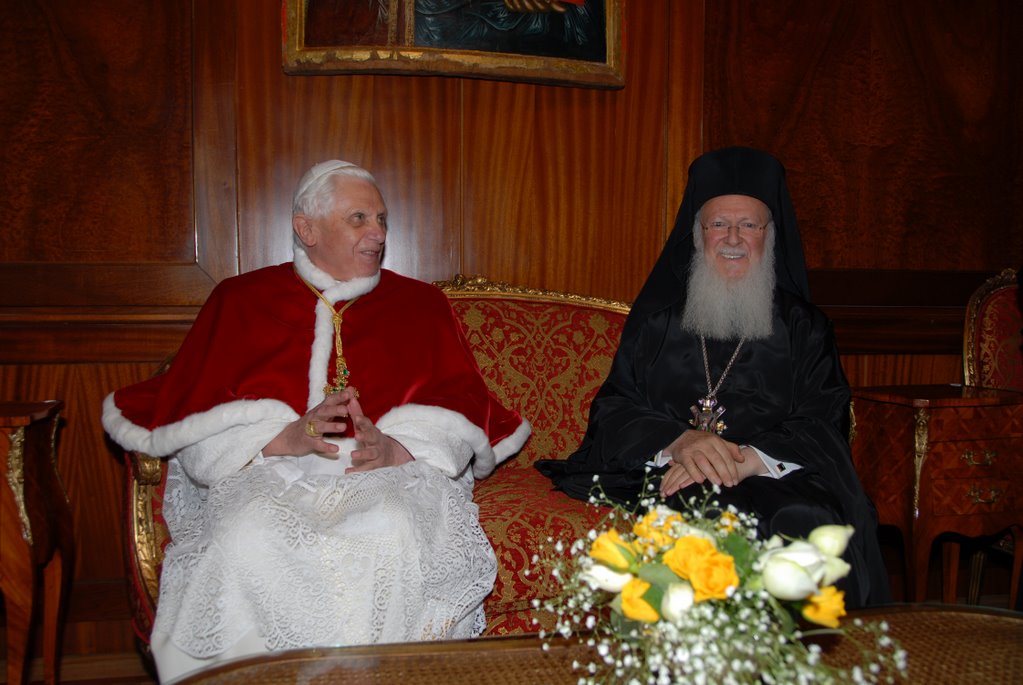
Cardinal Kasper said that the Pope’s encounter on St Andrew’s Day with Bartholomew I, the Ecumenical Patriarch of Constantinople, at the end of his trip remained “of fundamental importance”, as did protection of the Christian minority in Turkey. The two Christian leaders hope to move towards a healing of the 1,000-year-old schism between Latin and Eastern Christianity.
As a cardinal the Pope spoke out against the bid for EU membership by Turkey on religious and cultural grounds. Yesterday Cardinal Tarcisio Bertone, the Secretary of State, said the Vatican hoped that Turkey would “fulfil the conditions for EU entry”.
Behind the scenes Vatican and Italian security forces have planned for the worst, with agents joining Turkish police in checking security arrangements in Ankara, Istanbul and Ephesus, the main stops on the Pope’s tour.
Video surveillance cameras have been installed around key buildings, including the Holy See embassy in Ankara, where the Pope will stay on the first night of his trip after paying respects at the Mausoleum of Ataturk. Turkish police appealed for restraint at planned protests, saying that they could harm the image of Turkey.
Pray for our Holy Father!
Friday, November 24, 2006
A Sneak Peak at Pope Benedict's New Book
Zenit has a posted the preface of Pope Benedict's new book, "Jesus of Nazareth".
Here is a brief snippet:
Read the rest here.
It looks like another excellent book from one of my favorite theologians.
Here is a brief snippet:
I have come to the book on Jesus, the first part of which I now present, following a long interior journey. In the period of my youth -- the thirties and forties -- a series of fascinating books were published on Jesus. I remember the name of some of the authors: Karl Adam, Romano Guardini, Franz Michel Willam, Giovanni Papini, Jean Daniel-Rops. In all these books, the image of Jesus Christ was delineated from the Gospels: how he lived on earth and how, despite his being fully man, at the same time he led men to God, with whom, as Son, he was but one. Thus, through the man Jesus, God was made visible and from God the image of the just man could be seen.
Beginning in the fifties, the situation changed. The split between the "historical Jesus" and the "Christ of faith" became ever greater: One was rapidly removed from the other. However, what meaning could faith in Jesus Christ have, in Jesus the Son of the living God, if the man Jesus was so different from the way he was presented by the evangelists and the way he is proclaimed by the Church from the Gospels? Progress in historical-critical research led to ever more subtle distinctions between the different strata of tradition. In the wake of this research, the figure of Jesus, on which faith leans, became ever more uncertain, it took on increasingly less defined features....
Read the rest here.
It looks like another excellent book from one of my favorite theologians.
Thursday, November 23, 2006
Christ, the Church, and the World
The Church in the life and thought of St. Paul, the last in a series of lessons focussing on the figure of the Apostle, was the theme of Benedict XVI's catechesis during the general audience, held this morning in a rain-swept St. Peter's Square.
The Pope recalled how St. Paul's "first contact with the person of Jesus came about through the witness of the Christian community of Jerusalem. ... This gives us the opportunity to make a first important observation: normally we come to Jesus, either to accept Him or refuse Him, through the mediation of the community of believers."
"In a certain way this also happened to St. Paul," said the Pope, although in Paul's case "adherence to the Church was facilitated by a direct intervention of Christ, Who, revealing Himself on the road to Damascus, identified Himself with the Church and made Paul understand that to persecute the Church was to persecute Him. ... From this we can understand why the Church was so present in the thoughts, heart and activity of St. Paul."
He "founded many Churches in the various cities he visited as an evangelizer." And "in his Letters, Paul also explains his doctrine on the Church. ... Particularly well-known is his definition of the Church as the 'body of Christ,' which is not to be found in other first-century Christian writers."
"The deepest roots of this surprising definition of the Church," the Holy Father went on, "are to be found in the Sacrament of the body of Christ. ... In the Eucharist, Christ gives us His Body and makes us His Body. ... In this way, Paul brings us to understand that not only does the Church belong to Christ, but that there is also some form of equivalence and identification between the Church and Christ. Thence springs the greatness and nobility of the Church, in other words, of all of us who, as limbs of Christ, are part of the Church, almost an extension of His personal presence in the world."
"Thence also derive Paul's exhortations regarding the various charisms that animate and give structure to the Christian community," the Holy Father affirmed. "However, it is important that all such charisms work together to build the community and do not become a cause of its break-up."
"Of course, underscoring the need for unity does not mean that ecclesial life must be rendered uniform and dull. ... However, if there is one criterion that Paul holds dear it is that of mutual edification. ... One of the Pauline Letters even goes so far as to present the Church as the bride of Christ, ... both in the sense that love must be exchanged," and that "we must be passionately faithful to Him."
Benedict XVI concluded: "In the final analysis, what is involved is a relationship of communion: vertically between Jesus Christ and all of us, but also horizontally among all those who identify themselves in the world by calling 'on the name of our Lord Jesus Christ'."
VIS
The Pope recalled how St. Paul's "first contact with the person of Jesus came about through the witness of the Christian community of Jerusalem. ... This gives us the opportunity to make a first important observation: normally we come to Jesus, either to accept Him or refuse Him, through the mediation of the community of believers."
"In a certain way this also happened to St. Paul," said the Pope, although in Paul's case "adherence to the Church was facilitated by a direct intervention of Christ, Who, revealing Himself on the road to Damascus, identified Himself with the Church and made Paul understand that to persecute the Church was to persecute Him. ... From this we can understand why the Church was so present in the thoughts, heart and activity of St. Paul."
He "founded many Churches in the various cities he visited as an evangelizer." And "in his Letters, Paul also explains his doctrine on the Church. ... Particularly well-known is his definition of the Church as the 'body of Christ,' which is not to be found in other first-century Christian writers."
"The deepest roots of this surprising definition of the Church," the Holy Father went on, "are to be found in the Sacrament of the body of Christ. ... In the Eucharist, Christ gives us His Body and makes us His Body. ... In this way, Paul brings us to understand that not only does the Church belong to Christ, but that there is also some form of equivalence and identification between the Church and Christ. Thence springs the greatness and nobility of the Church, in other words, of all of us who, as limbs of Christ, are part of the Church, almost an extension of His personal presence in the world."
"Thence also derive Paul's exhortations regarding the various charisms that animate and give structure to the Christian community," the Holy Father affirmed. "However, it is important that all such charisms work together to build the community and do not become a cause of its break-up."
"Of course, underscoring the need for unity does not mean that ecclesial life must be rendered uniform and dull. ... However, if there is one criterion that Paul holds dear it is that of mutual edification. ... One of the Pauline Letters even goes so far as to present the Church as the bride of Christ, ... both in the sense that love must be exchanged," and that "we must be passionately faithful to Him."
Benedict XVI concluded: "In the final analysis, what is involved is a relationship of communion: vertically between Jesus Christ and all of us, but also horizontally among all those who identify themselves in the world by calling 'on the name of our Lord Jesus Christ'."
VIS
Pope Benedict's New Book Not a Magesterial Work
Holy See Press Office Director Fr. Federico Lombardi S.J., has written a note concerning a forthcoming book by Benedict XVI, scheduled for publication in the spring of 2007. The title of the volume is: "Gesu di Nazareth. Dal Battesimo nel Giordano alla Trasfigurazione" (Jesus of Nazareth, From His Baptism in the Jordan to the Transfiguration).
The Vatican Publishing House, which holds the copyright on all the Pope's writings, has ceded the world rights for the translation, distribution and marketing of this book to the Rizzoli Publishing House.
"The fact that Benedict XVI has managed to complete the first part of his great book on Jesus, and that within a few months we will have it in our hands, is wonderful news," writes Fr. Lombardi in his note. "I find it extraordinary that despite the duties and concerns of the pontificate, he has managed to complete a work of such great academic and spiritual depth. He says he dedicated all his free time to the project; and this itself is a very significant indication of the importance and urgency the book has for him.
"With his habitual simplicity and humility, the Pope explains that this is not a 'work of Magisterium' but the fruit of his own research, and as such it can be freely discussed and criticized. This is a very important observation, because it makes clear that what he writes in the book in no way binds the research of exegetes and theologians. It is not a long encyclical on Jesus, but a personal presentation of the figure of Jesus by the theologian Joseph Ratzinger, who has been elected as Bishop of Rome."
In the book's preface, Fr. Lombardi's note says, the Holy Father "explains that in modern culture, and in many presentations of the figure of Jesus, the gap between the 'historical Jesus' and the 'Christ of the faith' has become ever wider. ... Joseph Ratzinger, taking into consideration all the achievements of modern research, aims to present the Jesus of the Gospels as the real 'historical Jesus,' as a sensible and convincing figure to Whom we can and must trustingly refer, and upon Whom we have good reason to base our faith and our Christian life. With his book, then, the Pope aims to offer a fundamental service to support the faith of his brothers and sisters, and he does so from the central element of the faith: Jesus Christ."
In the introduction to the book, Fr. Lombardi continues, "Jesus is presented to us as the new Moses, the new prophet who speaks with 'God face to face,' ... the Son, deeply united to the Father. If this essential aspect is overlooked, the figure of Jesus become contradictory and incomprehensible. With passion, Joseph Ratzinger speaks to us of Jesus' intimate union with the Father, and wishes to ensure that Jesus' disciples participate in this communion. It is, then, a great work of exegesis and theology, but also a great work of spirituality."
Fr. Lombardi concludes: "Recalling the profound impression and the spiritual fruits that, as a young man, I drew from reading Joseph Ratzinger's first work - 'Introduction to Christianity' - I am sure that this time too we will not be disappointed, but that both believers and all people truly disposed to understand more fully the figure of Jesus, will be immensely grateful to the Pope for his great witness as a thinker, scholar and man of faith, on the most essential point of the entire Christian faith."
VIS
The Vatican Publishing House, which holds the copyright on all the Pope's writings, has ceded the world rights for the translation, distribution and marketing of this book to the Rizzoli Publishing House.
"The fact that Benedict XVI has managed to complete the first part of his great book on Jesus, and that within a few months we will have it in our hands, is wonderful news," writes Fr. Lombardi in his note. "I find it extraordinary that despite the duties and concerns of the pontificate, he has managed to complete a work of such great academic and spiritual depth. He says he dedicated all his free time to the project; and this itself is a very significant indication of the importance and urgency the book has for him.
"With his habitual simplicity and humility, the Pope explains that this is not a 'work of Magisterium' but the fruit of his own research, and as such it can be freely discussed and criticized. This is a very important observation, because it makes clear that what he writes in the book in no way binds the research of exegetes and theologians. It is not a long encyclical on Jesus, but a personal presentation of the figure of Jesus by the theologian Joseph Ratzinger, who has been elected as Bishop of Rome."
In the book's preface, Fr. Lombardi's note says, the Holy Father "explains that in modern culture, and in many presentations of the figure of Jesus, the gap between the 'historical Jesus' and the 'Christ of the faith' has become ever wider. ... Joseph Ratzinger, taking into consideration all the achievements of modern research, aims to present the Jesus of the Gospels as the real 'historical Jesus,' as a sensible and convincing figure to Whom we can and must trustingly refer, and upon Whom we have good reason to base our faith and our Christian life. With his book, then, the Pope aims to offer a fundamental service to support the faith of his brothers and sisters, and he does so from the central element of the faith: Jesus Christ."
In the introduction to the book, Fr. Lombardi continues, "Jesus is presented to us as the new Moses, the new prophet who speaks with 'God face to face,' ... the Son, deeply united to the Father. If this essential aspect is overlooked, the figure of Jesus become contradictory and incomprehensible. With passion, Joseph Ratzinger speaks to us of Jesus' intimate union with the Father, and wishes to ensure that Jesus' disciples participate in this communion. It is, then, a great work of exegesis and theology, but also a great work of spirituality."
Fr. Lombardi concludes: "Recalling the profound impression and the spiritual fruits that, as a young man, I drew from reading Joseph Ratzinger's first work - 'Introduction to Christianity' - I am sure that this time too we will not be disappointed, but that both believers and all people truly disposed to understand more fully the figure of Jesus, will be immensely grateful to the Pope for his great witness as a thinker, scholar and man of faith, on the most essential point of the entire Christian faith."
VIS
Monday, November 20, 2006
Pope Benedict Meets With the President of Italy
This morning in the Vatican, the Pope received Giorgio Napolitano, president of the Italian Republic, on an official visit. President Napolitano took office on May 15 this year.
Following a private meeting in his library, the Holy Father delivered an address, which was followed by some words from President Napolitano.
"Church and State," said Pope Benedict, "are both called, according to their respective missions and with their own ends and means, to serve man, ... and they collaborate in promoting his integral good."
The Holy Father highlighted how the civil community's solicitude for the good of citizens "cannot be limited ... to their physical health, economic wellbeing, intellectual formation and social relationships," and he stressed the fact that "human beings present themselves before the State also in their religious dimension."
"It would be reductive to consider that the right to religious freedom is sufficiently guaranteed when personal convictions suffer no violence or interference, or when we limit ourselves to respecting the expression of faith within the confines of a place of worship. It cannot, in fact, be forgotten that 'the social nature of man itself requires that he should give external expression to his internal acts of religion: that he should share with others in matters religious; that he should profess his religion in community.' Religious freedom is, then, not just of individuals, but also of families, of religious groups and of the Church herself."
"Adequate respect of the right to religious freedom," said the Pope, "implies, then, the commitment of civil authorities in helping to create 'conditions favorable to the fostering of religious life, in order that the people may be truly enabled to exercise their religious rights and to fulfill their religious duties'."
"The freedom that the Church and Christians claim does not prejudice the interests of the State or of other social groups, and does not seek an authoritative supremacy over them. Rather, it is a condition enabling ... the fulfillment of the vital service that the Church offers to Italy, and to all other countries in which she is present. This service to society, ... is also expressed towards the civil and political spheres. Indeed, although it is true that by her nature and mission 'the Church is not and does not intend to be a political player,' nonetheless she 'has a profound interest in the good of the political community'."
The Pope went on: "This specific contribution is chiefly made by the lay faithful," who "when they commit themselves through word and deed to confronting the great modern challenges, ... do not act out of their own specific interests or in the name of principles perceptible only to people who profess a specific religious creed. Rather, they do so in the context of, and following the rules of, democratic coexistence, for the good of all of society and in the name of values that all people of good will can share."
At the end of his address, the Pope expressed the hope that Italy "may continue to advance along the path of authentic progress, and offer the international community its precious contribution, always promoting those human and Christian values that have forged the country's history and culture, and its heritage of ideals, laws and arts; values that still lie at the base of the lives and activities of its citizens. These efforts," he concluded, "will not lack the loyal and generous contribution of the Catholic Church through the teaching of her bishops, ... and the work of all the faithful."
In his talk, President Napolitano highlighted his "profound awareness of the Catholic Church's exalted universal mission, and of the precious service she offers the nation." He also recalled how, "in Italy, the harmony of relations between State and Church has been and still is guaranteed by the lay principle of distinction, as sanctioned in the Constitution, as well as by the commitment - proclaimed in the agreements of revision of the Concordat - 'to reciprocal collaboration for the promotion of man and for the good of the country.' ... We believe deeply in the importance of such collaboration," the president added, and "we know and appreciate ... the public and social dimensions of religion."
Following his meeting with the Pope, the Italian president went on to visit Cardinal Secretary of State Tarcisio Bertone S.D.B., with whom he held a private meeting. He was then accompanied to the Sala Regia, where the cardinal secretary of State introduced him the diplomatic corps accredited to the Holy See.
In the Sala Regia, Cardinal Bertone delivered a talk in which he highlighted "the breadth of the relations the Holy See maintains with numerous States on all continents and with various international organizations. ... It is not by chance that even those who do not share our Christian faith look to the Pope as spokesman of the supreme moral prerequisites, and heed his calls for respect for the dignity of man, the promotion of peace and development, and sincere collaboration between peoples, religions and cultures for a better future for the human family."
The official ceremony concluded with a visit by President Napolitano to St. Peter's Basilica.
The Holy See Press Office released an official communique at the end of the Italian president's visit: "During the cordial discussions, satisfaction was expressed for the good relations between the Holy See and Italy, and between Church and State in the country. While respecting the right to religious freedom, and the respective autonomy of the ecclesial and civil communities, as well as their mutual collaboration, Italian Catholics will continue to make their contribution towards the dignity of man, the protection of life and the family, and the common good of society."
"The meetings also provided an opportunity to consider various aspects of international life, with particular emphasis on the delicate situation in the Middle East, on the prospects for the process of European integration, and on the serious problems of the African continent. The Holy See and Italy will continue to collaborate for a better working of international institutions."
VIS
Following a private meeting in his library, the Holy Father delivered an address, which was followed by some words from President Napolitano.
"Church and State," said Pope Benedict, "are both called, according to their respective missions and with their own ends and means, to serve man, ... and they collaborate in promoting his integral good."
The Holy Father highlighted how the civil community's solicitude for the good of citizens "cannot be limited ... to their physical health, economic wellbeing, intellectual formation and social relationships," and he stressed the fact that "human beings present themselves before the State also in their religious dimension."
"It would be reductive to consider that the right to religious freedom is sufficiently guaranteed when personal convictions suffer no violence or interference, or when we limit ourselves to respecting the expression of faith within the confines of a place of worship. It cannot, in fact, be forgotten that 'the social nature of man itself requires that he should give external expression to his internal acts of religion: that he should share with others in matters religious; that he should profess his religion in community.' Religious freedom is, then, not just of individuals, but also of families, of religious groups and of the Church herself."
"Adequate respect of the right to religious freedom," said the Pope, "implies, then, the commitment of civil authorities in helping to create 'conditions favorable to the fostering of religious life, in order that the people may be truly enabled to exercise their religious rights and to fulfill their religious duties'."
"The freedom that the Church and Christians claim does not prejudice the interests of the State or of other social groups, and does not seek an authoritative supremacy over them. Rather, it is a condition enabling ... the fulfillment of the vital service that the Church offers to Italy, and to all other countries in which she is present. This service to society, ... is also expressed towards the civil and political spheres. Indeed, although it is true that by her nature and mission 'the Church is not and does not intend to be a political player,' nonetheless she 'has a profound interest in the good of the political community'."
The Pope went on: "This specific contribution is chiefly made by the lay faithful," who "when they commit themselves through word and deed to confronting the great modern challenges, ... do not act out of their own specific interests or in the name of principles perceptible only to people who profess a specific religious creed. Rather, they do so in the context of, and following the rules of, democratic coexistence, for the good of all of society and in the name of values that all people of good will can share."
At the end of his address, the Pope expressed the hope that Italy "may continue to advance along the path of authentic progress, and offer the international community its precious contribution, always promoting those human and Christian values that have forged the country's history and culture, and its heritage of ideals, laws and arts; values that still lie at the base of the lives and activities of its citizens. These efforts," he concluded, "will not lack the loyal and generous contribution of the Catholic Church through the teaching of her bishops, ... and the work of all the faithful."
In his talk, President Napolitano highlighted his "profound awareness of the Catholic Church's exalted universal mission, and of the precious service she offers the nation." He also recalled how, "in Italy, the harmony of relations between State and Church has been and still is guaranteed by the lay principle of distinction, as sanctioned in the Constitution, as well as by the commitment - proclaimed in the agreements of revision of the Concordat - 'to reciprocal collaboration for the promotion of man and for the good of the country.' ... We believe deeply in the importance of such collaboration," the president added, and "we know and appreciate ... the public and social dimensions of religion."
Following his meeting with the Pope, the Italian president went on to visit Cardinal Secretary of State Tarcisio Bertone S.D.B., with whom he held a private meeting. He was then accompanied to the Sala Regia, where the cardinal secretary of State introduced him the diplomatic corps accredited to the Holy See.
In the Sala Regia, Cardinal Bertone delivered a talk in which he highlighted "the breadth of the relations the Holy See maintains with numerous States on all continents and with various international organizations. ... It is not by chance that even those who do not share our Christian faith look to the Pope as spokesman of the supreme moral prerequisites, and heed his calls for respect for the dignity of man, the promotion of peace and development, and sincere collaboration between peoples, religions and cultures for a better future for the human family."
The official ceremony concluded with a visit by President Napolitano to St. Peter's Basilica.
The Holy See Press Office released an official communique at the end of the Italian president's visit: "During the cordial discussions, satisfaction was expressed for the good relations between the Holy See and Italy, and between Church and State in the country. While respecting the right to religious freedom, and the respective autonomy of the ecclesial and civil communities, as well as their mutual collaboration, Italian Catholics will continue to make their contribution towards the dignity of man, the protection of life and the family, and the common good of society."
"The meetings also provided an opportunity to consider various aspects of international life, with particular emphasis on the delicate situation in the Middle East, on the prospects for the process of European integration, and on the serious problems of the African continent. The Holy See and Italy will continue to collaborate for a better working of international institutions."
VIS
The Value of the Cloister
Yesterday, in his remarks prior to praying the Angelus, the Pope recalled cloistered religious communities who, on November 21, celebrate the Day "pro Orantibus," which is dedicated to them.
"This is a particularly appropriate occasion," said the Pope to the thousands of faithful gathered in St. Peter's Square, "to give thanks to the Lord for the gift of so many people who, in monasteries and hermitages, dedicate themselves entirely to God in prayer and silence.
"Some people ask themselves," he added, "what meaning and value can the presence of such people have in our time, in which the situations of want and poverty we have to face are so numerous and urgent. Why 'cloister' oneself forever within the walls of a monastery, thus depriving others ... of one's abilities and experiences? What effect can prayer have for resolving the many concrete problems that continue to afflict humanity?"
Also today, many are surprised by "the people who abandon often promising careers to embrace the austere rule of a cloistered monastery. What is it that pushes them to such a radical step if not having understood, as the Gospel teaches, that the Kingdom of heaven is 'a treasure' for which it is truly worthwhile to abandon everything?"
Such people, the Pope explained, "bear silent witness to the fact that in the midst of the uncertainties of daily life, ... the only support that never fails is God. ... And in the face of the widespread need, felt by many, to escape the daily routine of the great urban centers in search of spaces suitable for silence and contemplation, monasteries of contemplative life are like 'oases' in which man, a pilgrim upon earth, can better draw upon the sources of the Spirit and quench his thirst on his journey.
"These places, then, apparently useless, are in fact indispensable. Like the green 'lungs' of a city, they are good for everyone, even for people who ... perhaps do not know of their existence."
After praying the Angelus, the Pope recalled that today is the day of road accident victims, and he invited everyone to pray for those killed in traffic accidents, entrusting "the injured, many of who are often permanently disabled," to the Virgin Mary. "I tirelessly ask motorists to respect the traffic regulations, and always to pay attention to others," he concluded.
VIS
"This is a particularly appropriate occasion," said the Pope to the thousands of faithful gathered in St. Peter's Square, "to give thanks to the Lord for the gift of so many people who, in monasteries and hermitages, dedicate themselves entirely to God in prayer and silence.
"Some people ask themselves," he added, "what meaning and value can the presence of such people have in our time, in which the situations of want and poverty we have to face are so numerous and urgent. Why 'cloister' oneself forever within the walls of a monastery, thus depriving others ... of one's abilities and experiences? What effect can prayer have for resolving the many concrete problems that continue to afflict humanity?"
Also today, many are surprised by "the people who abandon often promising careers to embrace the austere rule of a cloistered monastery. What is it that pushes them to such a radical step if not having understood, as the Gospel teaches, that the Kingdom of heaven is 'a treasure' for which it is truly worthwhile to abandon everything?"
Such people, the Pope explained, "bear silent witness to the fact that in the midst of the uncertainties of daily life, ... the only support that never fails is God. ... And in the face of the widespread need, felt by many, to escape the daily routine of the great urban centers in search of spaces suitable for silence and contemplation, monasteries of contemplative life are like 'oases' in which man, a pilgrim upon earth, can better draw upon the sources of the Spirit and quench his thirst on his journey.
"These places, then, apparently useless, are in fact indispensable. Like the green 'lungs' of a city, they are good for everyone, even for people who ... perhaps do not know of their existence."
After praying the Angelus, the Pope recalled that today is the day of road accident victims, and he invited everyone to pray for those killed in traffic accidents, entrusting "the injured, many of who are often permanently disabled," to the Virgin Mary. "I tirelessly ask motorists to respect the traffic regulations, and always to pay attention to others," he concluded.
VIS
The Purpose of Marriage
On November 18th, the Pope received the second group of prelates from the German Bishops' Conference, at the end of their "ad limina" visit.
Opening his talk to them, the Holy Father highlighted how, "the encounter with the living Christ is always at the heart of our service, an encounter that confers a decisive orientation upon our lives."
Proceeding with his address, Benedict XVI referred to the bishops' concern "for an adequate development of pastoral structures to meet the present situation." In this context he pointed out how, faced with falling numbers of priests and of faithful attending Sunday Mass, various German dioceses are implementing models for restructuring pastoral care, in which the image of the pastor "risks being obscured."
I am sure, he told the prelates, "that you will give your approval only to those structural reforms that are in full harmony with the Church's teaching on the priesthood and with her juridical norms, ensuring that the implementation of reforms does not diminish the power of attraction of the priestly ministry."
Referring to the question of lay participation in ecclesial structures, the Holy Father recalled "the broad and open field of the lay apostolate ... and its multiple tasks." These include, he said, announcing the Gospel, catechesis, charity work, the media of social communication, and "social commitment for the integral protection of human life and social justice."
The Pope then turned to consider the question of "announcing the faith to the young people of our time," who live "in a secularized culture" in which God is absent. It is important, he said, that, in the Church, acolytes "encounter God, His Word, and the Sacrament of His presence, and that they learn to model their lives on this basis." As for ecclesial movements, the Pope told the bishops that "we must respect the specific nature of their charisms, and be happy that shared forms of faith come into being in which the Word of God becomes life."
The Church's charitable activity must, said Pope Benedict "be kept apart from the confusion of political interests, ... and used for the good of people." In this field, he called for "close collaboration with bishops and with episcopal conferences."
"The order of marriage as established at the creation," said the Holy Father, "is becoming progressively obscured today." In the face of a materialist culture, "it is difficult for young people to commit themselves to one another definitively," to have children, "and to offer them that lasting space for growth and maturity which only the family based upon marriage can provide."
In such as situation, he went on, "it is vitally important to help young people to pronounce that definitive 'yes,' which does not contrast with freedom but, rather, represents its greatest opportunity. In the patience of remaining together for a lifetime, love achieves its true maturity. And in such an environment of lifelong love, children also learn to live and to love."
Finally, the Pope turned to the question of ecumenism. "In Germany," he said, "our efforts must be directed, above all towards Christians of Lutheran and Reformed faith. ... Ecumenical commitment cannot be entirely fulfilled with joint documents. It becomes visible and effective where Christians from different Churches and ecclesial communities - in a social context that is ever further removed from religion - profess, together and convincingly, the values transmitted by the Christian faith, and emphasize them forcefully in their political and social activities."
VIS
Opening his talk to them, the Holy Father highlighted how, "the encounter with the living Christ is always at the heart of our service, an encounter that confers a decisive orientation upon our lives."
Proceeding with his address, Benedict XVI referred to the bishops' concern "for an adequate development of pastoral structures to meet the present situation." In this context he pointed out how, faced with falling numbers of priests and of faithful attending Sunday Mass, various German dioceses are implementing models for restructuring pastoral care, in which the image of the pastor "risks being obscured."
I am sure, he told the prelates, "that you will give your approval only to those structural reforms that are in full harmony with the Church's teaching on the priesthood and with her juridical norms, ensuring that the implementation of reforms does not diminish the power of attraction of the priestly ministry."
Referring to the question of lay participation in ecclesial structures, the Holy Father recalled "the broad and open field of the lay apostolate ... and its multiple tasks." These include, he said, announcing the Gospel, catechesis, charity work, the media of social communication, and "social commitment for the integral protection of human life and social justice."
The Pope then turned to consider the question of "announcing the faith to the young people of our time," who live "in a secularized culture" in which God is absent. It is important, he said, that, in the Church, acolytes "encounter God, His Word, and the Sacrament of His presence, and that they learn to model their lives on this basis." As for ecclesial movements, the Pope told the bishops that "we must respect the specific nature of their charisms, and be happy that shared forms of faith come into being in which the Word of God becomes life."
The Church's charitable activity must, said Pope Benedict "be kept apart from the confusion of political interests, ... and used for the good of people." In this field, he called for "close collaboration with bishops and with episcopal conferences."
"The order of marriage as established at the creation," said the Holy Father, "is becoming progressively obscured today." In the face of a materialist culture, "it is difficult for young people to commit themselves to one another definitively," to have children, "and to offer them that lasting space for growth and maturity which only the family based upon marriage can provide."
In such as situation, he went on, "it is vitally important to help young people to pronounce that definitive 'yes,' which does not contrast with freedom but, rather, represents its greatest opportunity. In the patience of remaining together for a lifetime, love achieves its true maturity. And in such an environment of lifelong love, children also learn to live and to love."
Finally, the Pope turned to the question of ecumenism. "In Germany," he said, "our efforts must be directed, above all towards Christians of Lutheran and Reformed faith. ... Ecumenical commitment cannot be entirely fulfilled with joint documents. It becomes visible and effective where Christians from different Churches and ecclesial communities - in a social context that is ever further removed from religion - profess, together and convincingly, the values transmitted by the Christian faith, and emphasize them forcefully in their political and social activities."
VIS
Sunday, November 19, 2006
Being a Slave for God
St. Paul was, once again, the theme of Benedict XVI's catechesis during his weekly general audience, held Wednesday morning in St. Peter's Square.
"Having meditated last week upon St. Paul's writings concerning Jesus Christ's central position in our life of faith," said the Pope, "today we consider what he says about the Holy Spirit."
"St. Paul, in his Letters, ... does not limit himself to explaining just the dynamic and active role of the third Person of the Blessed Trinity, but also analyzes the presence of the Spirit in the lives of Christians, whose identity is thereby marked. In other words, Paul reflects upon the Spirit, explaining its influence not only upon the activities of Christians but also upon their being."
Quoting the words of St. Paul, the Holy Father said: "You did not receive the spirit of slavery to fall back into fear, but you have received the spirit of sonship." It is clear then, he went on, "that Christians, even before they act, possess a rich and fruitful inner life ... that instates them in a ... filial relationship with God. This is our greatest dignity, that of being not just the image but the children of God," which, in turn, "is an invitation to transform this objective gift into a subjective reality, that determines our way of thinking, acting and being."
"Paul also teaches us," the Holy Father continued, "that there is no true prayer without the presence of the Spirit within us." The Spirit is "like the soul of our soul, the most secret part of our being, whence a prayer incessantly rises towards God."
"Another aspect of the Spirit ... is its association with love. ... The Spirit introduces us into the very rhythm of divine life, which is a life of love. ... And since by definition love unites, this means, above all, that the Spirit is a creator of communion within the Christian community."
"Finally, the Spirit, according to St. Paul, is a generous down payment given us by God Himself as a foretaste and guarantee of our future inheritance. ...The action of the Spirit guides our lives towards the great values of love, joy, communion and hope."
VIS
"Having meditated last week upon St. Paul's writings concerning Jesus Christ's central position in our life of faith," said the Pope, "today we consider what he says about the Holy Spirit."
"St. Paul, in his Letters, ... does not limit himself to explaining just the dynamic and active role of the third Person of the Blessed Trinity, but also analyzes the presence of the Spirit in the lives of Christians, whose identity is thereby marked. In other words, Paul reflects upon the Spirit, explaining its influence not only upon the activities of Christians but also upon their being."
Quoting the words of St. Paul, the Holy Father said: "You did not receive the spirit of slavery to fall back into fear, but you have received the spirit of sonship." It is clear then, he went on, "that Christians, even before they act, possess a rich and fruitful inner life ... that instates them in a ... filial relationship with God. This is our greatest dignity, that of being not just the image but the children of God," which, in turn, "is an invitation to transform this objective gift into a subjective reality, that determines our way of thinking, acting and being."
"Paul also teaches us," the Holy Father continued, "that there is no true prayer without the presence of the Spirit within us." The Spirit is "like the soul of our soul, the most secret part of our being, whence a prayer incessantly rises towards God."
"Another aspect of the Spirit ... is its association with love. ... The Spirit introduces us into the very rhythm of divine life, which is a life of love. ... And since by definition love unites, this means, above all, that the Spirit is a creator of communion within the Christian community."
"Finally, the Spirit, according to St. Paul, is a generous down payment given us by God Himself as a foretaste and guarantee of our future inheritance. ...The action of the Spirit guides our lives towards the great values of love, joy, communion and hope."
VIS
Aborted Babies to be Used to Make Vaccines
H/T to Fr. Landry.
The FDA has invited the general public to voice their opinions regarding the use of aborted babies to make vaccines for Ebola, HIV, Influenza, and Avian Flu.
More information can be found here and here.
Please voice your opposition to this evil.
Write to the FDA before December 28 at:
Divisions of Docket Management, HFA-305
Food and Drug Administration
5630 Fishers Lane
Room 1061
Rockville MD 20845
Include Docket Number 2006D-0383 on your correspondence.
The FDA has invited the general public to voice their opinions regarding the use of aborted babies to make vaccines for Ebola, HIV, Influenza, and Avian Flu.
More information can be found here and here.
Please voice your opposition to this evil.
Write to the FDA before December 28 at:
Divisions of Docket Management, HFA-305
Food and Drug Administration
5630 Fishers Lane
Room 1061
Rockville MD 20845
Include Docket Number 2006D-0383 on your correspondence.
Tuesday, November 14, 2006
I Wouldn't Miss This For Anything
Avery Cardinal Dulles will give the keynote address at a symposium entitled Divine Impassibility and the Mystery of Human Suffering. The symposium will be from March 30-31st at my school...Providence College.
The Providence College website describes the event as follows:
The other speakers are:
Needless to say, I will be there.
For more information, including registration information, visit the event website.
The Providence College website describes the event as follows:
The question of divine impassibility has resurfaced in theological literature in recent years, reigniting long-standing debate on classical metaphysics and Christian revelation.
Providence College is pleased to announce an upcoming theological conference which will highlight a particular issue: the relationship among divine impassibility, human suffering, and divine providence.
How does a doctrine of God's passibility or impassibility affect how we understand his governance of the world, particularly with regard to human suffering?
Theologians from a diversity of Christian confessional traditions will discuss these subjects, providing impetus for reflection from a variety of theoretical standpoints.
The other speakers are:
Paul L. Gavrilyuk, Ph.D.
Susan Ashbrook Harvey, Ph.D.
Bruce Lindley McCormack, Ph.D.
Peter Casarella, Ph.D.
Bruce D. Marshall, Ph.D.
Paul Gondreau, Ph.D.
Robert W. Jenson, Ph.D.
R. Trent Pomplun, Ph.D.
David Bentley Hart, Ph.D.
Rev. Brian J. Shanley, O.P., Ph.D.
Fr. Thomas G. Weinandy, OFM, Cap., Ph.D.
Needless to say, I will be there.
For more information, including registration information, visit the event website.
Monday, November 13, 2006
The Ethics of Marriage and the Family
At the close of his meeting with prelates from the Conference of Swiss Bishops and heads of certain dicasteries of the Roman Curia, which took place on the afternoon of November 9, Benedict XVI pronounced an address, the text of which was made public today.
"We must nor allow our faith to be drained by too much discussion on a multiplicity of less-important details," said the Pope. "It is fundamental to highlight the greatness of our faith. ... Above all, it is important to cultivate a personal relationship with God, with the God Who showed Himself to us in Christ."
"God," he continued, "is 'Spiritus creator,' He is 'Logos,' He is reason. Because of this our faith is something that involves reason. It can be transmitted through reason and need not hide itself in the face of reason, not even the reason of our own times. ... Reason, indeed, has a heart, and so was able to renounce its own immensity and become flesh. In this and only in this, I believe, lies the ultimate and true greatness of our concept of God. We know that God is not a philosophical hypothesis, He is not something that perhaps exists, rather we know Him and He knows us. And we can know Him ever better if we maintain a dialogue with Him.
"Hence," the Holy Father added, "it is a fundamental task of pastoral care to teach others to pray and to learn to do so ourselves." In this context, he referred to the importance of "increasing the number of prayer schools, ... where personal prayer can be learned it all its dimensions."
"This intimacy with God and, hence, the experience of the presence of God is what brings us ... to experience the greatness of Christianity. It helps us to overcome all pettiness, and must be experienced and realized day by day - suffering and loving, in joy and in sadness."
Another theme to which the Holy Father turned his attention during his address to the prelates was that of ethics. "I often hear it said that people today feel nostalgia for God, spirituality and religion, and that they begin to see the Church as a possible interlocutor from which something may be received in this regard. ... However, what people find very difficult are the ethics the Church proclaims. I have long reflected upon this matter, and I see ever more clearly how, in our time, it is as if ethics have divided into two parts. Modern society is not simply ethic-less but has, so to say, 'discovered' and claimed another aspect of ethics which, in the Church's announcement over recent decades ... has not been sufficiently emphasized. This includes the great themes of peace, non-violence, justice for all, care for the poor and respect for creation.
"All this," he added, "has grown into an ethical system which has great power as a political force and, for many people, represents a substitute or surrogate for religion. In place of religion, which is seen as a metaphysical entity concerning the hereafter - perhaps even as something individualistic - these great moral themes appear to be the essential questions that confer dignity upon man."
"The other aspect of ethics, which politics not infrequently takes up in a highly controversial manner, concerns life. Part of this is the commitment to life from conception to natural death; in other words, defending life against abortion and euthanasia, against its manipulation, and against man's self-legitimization to dispose of life as he chooses. Often, people seek to justify such intervention with the apparently exalted intention of its being useful to future generations."
"The ethics of marriage and the family are part of the same context. Marriage is, so to say, becoming ever more marginalized. We know the example of certain countries where there have been legislative modifications according to which marriage is no longer defined as a bond between man and woman, but as a bond between persons. This clearly destroys the basic idea (of marriage), and society, from its very roots, becomes something completely different."
Benedict XVI went on: "The belief that sexuality, eros and marriage, as the union between a man and a woman, go together ... is becoming ever weaker. All kinds of union appear absolutely normal," and "this is presented as a kind of morality of non-discrimination and a form of freedom that is mankind's due. Thus the indissolubility of marriage has become an almost utopian idea." Moreover, although "the problem of the disturbing drop in birth rates has multiple explanations," a decisive factor is that "people have little faith in the future," and that "the family as a durable community" is considered an unattainable goal.
"In these areas, then, our announcement comes up against a counter-belief of society, with a sort of anti-morality based on its concept of freedom as the faculty to decide autonomously without predefined guidance, as non-discrimination, and hence as the approval of all possibilities."
"But other beliefs have not disappeared. They exist, and I believe we must make every effort to bring these two parts of ethics back together, and make it clear that they are inseparably linked. ... I believe we are facing a great task: on the one hand, ensuring that Christianity does not appear as mere moralism but as a gift in which we are given a love that supports us. ... On the other hand, in this context of donated love, we must advance towards giving concrete form (to our ideas), on the foundation of the Ten Commandments which, with Christ and the Church, we must read in our own time in a new and progressive light."
VIS
"We must nor allow our faith to be drained by too much discussion on a multiplicity of less-important details," said the Pope. "It is fundamental to highlight the greatness of our faith. ... Above all, it is important to cultivate a personal relationship with God, with the God Who showed Himself to us in Christ."
"God," he continued, "is 'Spiritus creator,' He is 'Logos,' He is reason. Because of this our faith is something that involves reason. It can be transmitted through reason and need not hide itself in the face of reason, not even the reason of our own times. ... Reason, indeed, has a heart, and so was able to renounce its own immensity and become flesh. In this and only in this, I believe, lies the ultimate and true greatness of our concept of God. We know that God is not a philosophical hypothesis, He is not something that perhaps exists, rather we know Him and He knows us. And we can know Him ever better if we maintain a dialogue with Him.
"Hence," the Holy Father added, "it is a fundamental task of pastoral care to teach others to pray and to learn to do so ourselves." In this context, he referred to the importance of "increasing the number of prayer schools, ... where personal prayer can be learned it all its dimensions."
"This intimacy with God and, hence, the experience of the presence of God is what brings us ... to experience the greatness of Christianity. It helps us to overcome all pettiness, and must be experienced and realized day by day - suffering and loving, in joy and in sadness."
Another theme to which the Holy Father turned his attention during his address to the prelates was that of ethics. "I often hear it said that people today feel nostalgia for God, spirituality and religion, and that they begin to see the Church as a possible interlocutor from which something may be received in this regard. ... However, what people find very difficult are the ethics the Church proclaims. I have long reflected upon this matter, and I see ever more clearly how, in our time, it is as if ethics have divided into two parts. Modern society is not simply ethic-less but has, so to say, 'discovered' and claimed another aspect of ethics which, in the Church's announcement over recent decades ... has not been sufficiently emphasized. This includes the great themes of peace, non-violence, justice for all, care for the poor and respect for creation.
"All this," he added, "has grown into an ethical system which has great power as a political force and, for many people, represents a substitute or surrogate for religion. In place of religion, which is seen as a metaphysical entity concerning the hereafter - perhaps even as something individualistic - these great moral themes appear to be the essential questions that confer dignity upon man."
"The other aspect of ethics, which politics not infrequently takes up in a highly controversial manner, concerns life. Part of this is the commitment to life from conception to natural death; in other words, defending life against abortion and euthanasia, against its manipulation, and against man's self-legitimization to dispose of life as he chooses. Often, people seek to justify such intervention with the apparently exalted intention of its being useful to future generations."
"The ethics of marriage and the family are part of the same context. Marriage is, so to say, becoming ever more marginalized. We know the example of certain countries where there have been legislative modifications according to which marriage is no longer defined as a bond between man and woman, but as a bond between persons. This clearly destroys the basic idea (of marriage), and society, from its very roots, becomes something completely different."
Benedict XVI went on: "The belief that sexuality, eros and marriage, as the union between a man and a woman, go together ... is becoming ever weaker. All kinds of union appear absolutely normal," and "this is presented as a kind of morality of non-discrimination and a form of freedom that is mankind's due. Thus the indissolubility of marriage has become an almost utopian idea." Moreover, although "the problem of the disturbing drop in birth rates has multiple explanations," a decisive factor is that "people have little faith in the future," and that "the family as a durable community" is considered an unattainable goal.
"In these areas, then, our announcement comes up against a counter-belief of society, with a sort of anti-morality based on its concept of freedom as the faculty to decide autonomously without predefined guidance, as non-discrimination, and hence as the approval of all possibilities."
"But other beliefs have not disappeared. They exist, and I believe we must make every effort to bring these two parts of ethics back together, and make it clear that they are inseparably linked. ... I believe we are facing a great task: on the one hand, ensuring that Christianity does not appear as mere moralism but as a gift in which we are given a love that supports us. ... On the other hand, in this context of donated love, we must advance towards giving concrete form (to our ideas), on the foundation of the Ten Commandments which, with Christ and the Church, we must read in our own time in a new and progressive light."
VIS
Thursday, November 09, 2006
Have the Jesuits Lost Touch with Reality?
Sandro Magister has written an interesting commentary on an editorial written in the Jesuit magazine “La Civiltà Cattolica”.
He writes:
Read the complete article here.
He writes:
The editorial acknowledges that after September 11, 2001, “acts of terrorism have increased.” This “recrudescence” of Islamist terrorism – in the judgment of “La Civiltà Cattolica” – is mainly a “consequence” of the wars waged by the United States in Afghanistan and Iraq. That the Holy See considered the war in Iraq a mistake is well known. But the editorial in “La Civiltà Cattolica” goes so far as to establish a general rule. It writes that any war against “countries that harbor, finance, or train terrorist groups” is always “a serious political error.” And it explains its assumption this way: “The reason is simple: the military invasion of an Islamic country, like Afghanistan or Iraq, is considered by the entire Islamic umma [nation] as a grave offense against Allah, because this is a negation of its rights and a usurpation of its authority, which is expressed in sharia.
Read the complete article here.
Beware of False Relics
Ansa is reporting that there are false relics of Pope John Paul II being sold in shops near the Vatican.
Small pieces of cloth being sold near the Vatican as 'relics' of the ever popular John Paul II are bogus, Catholic Church authorities warned on Thursday .
Scraps of material which have allegedly been rubbed against the tomb of the late pontiff are being sold to tourists in at least one souvenir shop .
The scraps of material, encased in a round piece of transparent plastic, are available in three sizes and start at 3 euros each .
The same shop is also selling statuettes of the Polish pontiff on which he is described as Saint John Paul II, even though the process expected to lead to his canonisation is still long from over .
The shopkeeper was asked by a journalist on Thursday whether the articles had been approved for sale by the Vatican. He declined to answer .
Monsignor Slawomir Oder, the official in charge of John Paul's canonisation process, said that the cloth 'relics' now on sale had definitely not received a green light from either his office or the Rome diocese ."
They have no official recognition and anyway what's the point of rubbing cloth on his tomb when you can have a piece of one of his robes?" he said .Msgr Oder pointed out that pilgrims and devotees can obtain official John Paul relics free of charge through his office at the diocesan headquarters .
The authorised items comprise a small picture of the Polish pope together with a fragment cut out of one of the tunics he wore as pope .
Ever since John Paul died in April 2005, pilgrims have been coming to Rome to visit his tomb at St Peter's Basilica. Souvenir shops do a roaring trade in gadgets, calendars, posters showing the popular pontiff's face.
The widespread fascination with the charismatic figure has been fed by numerous TV dramas and films about his life. Meanwhile, procedures are under way to have the late pope declared a saint and there are frequent reports of alleged miracles attributed to him .
The Importance of Eucharistic Adoration
This morning, the Holy Father received participants in the plenary assembly of the Pontifical Committee for International Eucharistic Congresses.
In his address to the delegates, the Pope first recalled how they are currently preparing the 49th International Eucharistic Congress, due to be held in Quebec, Canada, in June 2008. Eucharistic congresses, he went on, "are always a source of spiritual renewal, an occasion to make better known the Blessed Eucharist, which was the most valuable treasure Jesus left us. They also constitute an encouragement for the Church to spread the love of Christ at all levels of society, and to testify to it without hesitation."
The presence at the gathering of a number of representatives of the Adorers of the Eucharist, said Benedict XVI, gave him the opportunity to recall "just how beneficial the rediscovery of Eucharistic adoration by many Christians is. ... How much need modern humanity has to rediscover the source of its hope in the Sacrament of the Eucharist! I thank the Lord because many parishes, alongside the devout celebration of Mass, are educating the faithful in Eucharistic adoration. And it is my hope that - also in view of the next International Eucharistic Congress - this practice will become ever more widespread."
Referring to the forthcoming post-Synodal Apostolic Exhortation on the Eucharist, which will bring together the indications that arose during the October 2005 Synod on that Sacrament, the Pope concluded by giving assurances that the document "will help the Church to prepare and celebrate ... the Eucharistic congress to be held in June 2008."
VIS
In his address to the delegates, the Pope first recalled how they are currently preparing the 49th International Eucharistic Congress, due to be held in Quebec, Canada, in June 2008. Eucharistic congresses, he went on, "are always a source of spiritual renewal, an occasion to make better known the Blessed Eucharist, which was the most valuable treasure Jesus left us. They also constitute an encouragement for the Church to spread the love of Christ at all levels of society, and to testify to it without hesitation."
The presence at the gathering of a number of representatives of the Adorers of the Eucharist, said Benedict XVI, gave him the opportunity to recall "just how beneficial the rediscovery of Eucharistic adoration by many Christians is. ... How much need modern humanity has to rediscover the source of its hope in the Sacrament of the Eucharist! I thank the Lord because many parishes, alongside the devout celebration of Mass, are educating the faithful in Eucharistic adoration. And it is my hope that - also in view of the next International Eucharistic Congress - this practice will become ever more widespread."
Referring to the forthcoming post-Synodal Apostolic Exhortation on the Eucharist, which will bring together the indications that arose during the October 2005 Synod on that Sacrament, the Pope concluded by giving assurances that the document "will help the Church to prepare and celebrate ... the Eucharistic congress to be held in June 2008."
VIS
Subscribe to:
Posts (Atom)